 datong


How To Test Plug Sockets
The quickest way is to use a plug tester to instantly judge whether the polarity and grounding are normal through the LED indicator light; If the ultimate accuracy is pursued, a digital multimeter will have to be offered, dialed to the AC voltage range (AC), and measured the voltage between the live wire, neutral wire and ground wire.
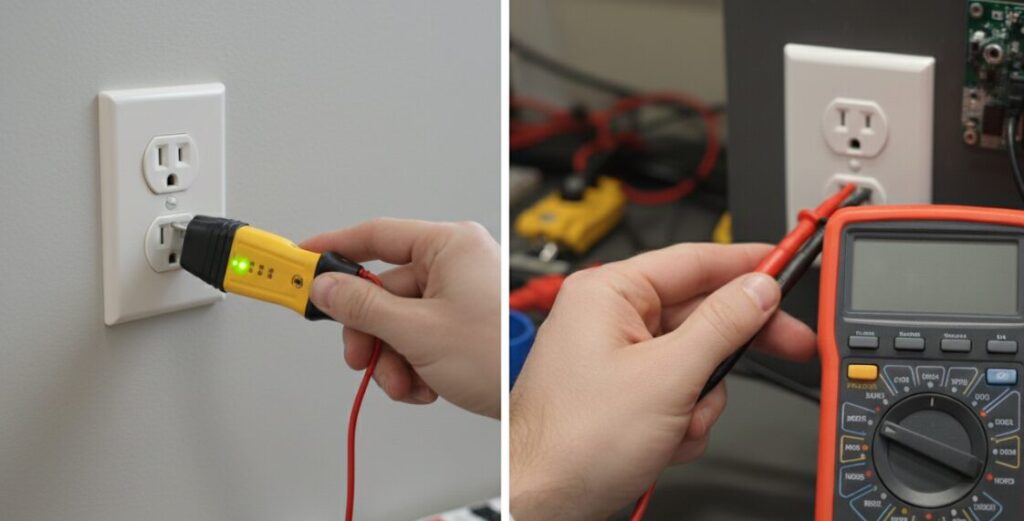
Before the hands-on test, glance at the distribution box to confirm that the circuit breaker or RCD (leakage protector) has not tripped. If you use a multimeter, insert the probe into the socket socket: between the live wire and the neutral wire, the live wire and the ground wire, you should be able to read a stable value (usually 230V or 110V) that matches the local power grid; If the reading between the zero line and the ground line is close to zero, the circuit loop is normal. If the tester reports “lack of ground wire”, “zero line fault” or “reverse polarity connection”, or the voltage on the multimeter jumps incessantly, it can be basically concluded that the internal wiring of the socket is loose, oxidized and corroded or short-circuited. You must cut off the power and replace it immediately, otherwise it is only a matter of time before the electrical fire or equipment is damaged.
Method 1: Use Plug Tester
Plug testers are the line of defense in the face of large-scale installation of industrial sockets.
This tool provides intuitive diagnostic results. After plugging it in, observe the combination mode of LED lights:
Correct wiring: usually shows that all indicator lights are on (depending on the description of the device you have at hand).
Fault indication: These testers are specifically designed to capture common low-level errors such as “missing ground” or “reverse polarity. If your industrial equipment is inexplicably shut down, plug it in first, which can help you quickly eliminate the suspicion of the socket end.
Method 2: Use Digital Multimeter
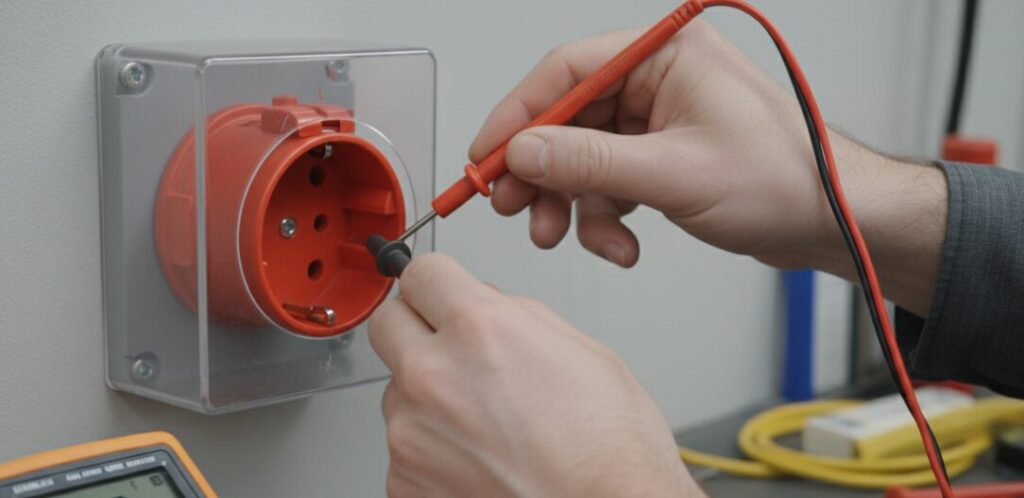
If you want to meet the industrial-grade safety compliance requirements, you still have to look at the quantitative data given by the multimeter. Especially when you need to ensure that industrial plugs deliver accurate voltage to heavy machinery, this step is crucial.
Set gear: Make sure the multimeter switches to AC and the range is above the expected 110V or 230V.
Test of live wire to neutral wire: insert the stylus and read about ~ 230V (or local standard voltage) to confirm that the power supply of the circuit is normal.
Fire-to-ground test: A similar voltage value should be read here. This step is very critical, it can verify whether the ground wire is really connected, not virtual.
Zero-to-ground test: theoretically, the reading should tend to zero. If there is a significant voltage here, be alert, which usually means a serious neutral line failure or ground loop problem.
Why Is There A Problem With The Socket?
If a “zero line fault”, “reverse polarity” or erratic voltage is found in the test, the socket has been included in the “danger list. This type of failure is usually caused by the following reasons:
Internal corrosion: In workshops with high humidity or chemical concentrations, metal contact points are prone to oxidation.
Loose wiring: long-term vibration of equipment or thermal expansion and contraction of materials will loosen the screws.
Internal short circuit: hidden danger caused by aging and damage of insulating materials.
Why Should It Be Replaced Immediately?
A broken socket is not just as simple as “no electricity”, it is a fire point that may ignite at any time. I strongly recommend replacing them as soon as find signs of failure.
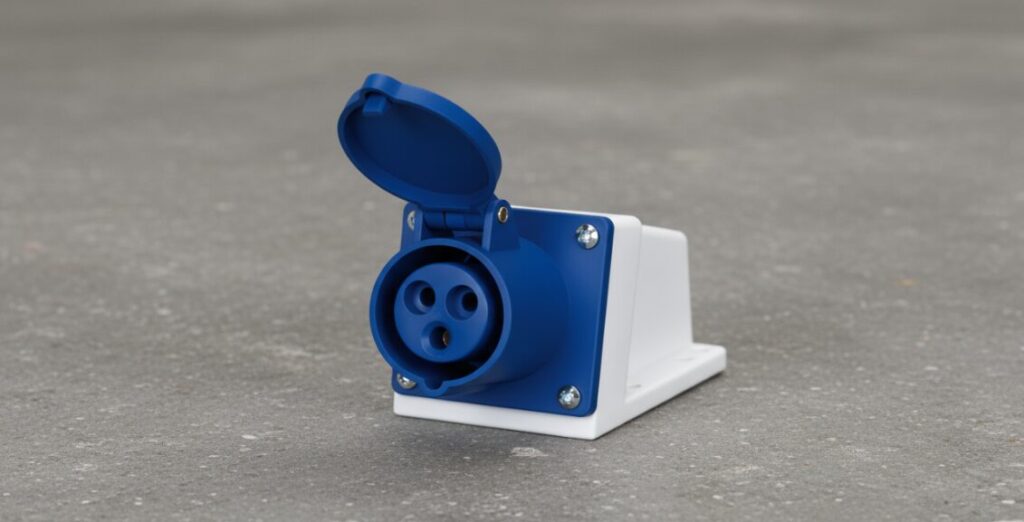
Once the continuity cannot be measured or the voltage is found to be unstable, the power supply should be turned off immediately at the circuit breaker. Replacing a high-quality, certified industrial socket like DTCEE is not only to ensure durability in the long run, but also to avoid expensive equipment maintenance costs and potential fire risks.
Author: James Sterling
“I am an industrial maintenance specialist with over a decade of hands-on experience in electrical safety and facility management. Throughout my career in high-demand workshop environments, I have made it my mission to eliminate electrical hazards before they lead to costly downtime or accidents. I believe that professional-grade safety starts with the right tools—whether it’s a quick diagnostic with a plug tester or a precision voltage analysis using a digital multimeter. “