 datong


What Size Cable For Outdoor Sockets
For the vast majority of UK and European standard residential or DIY projects, 2.5mm ² three-core steel-wire-armored cable (SWA) is the most standard and reliable choice. In my experience, this specification is optimized specifically for 13A or 20A radial circuit, achieving a near-perfect balance between current carrying capacity and mechanical protection.
1.5mm ² cable with a garden lamp may make do, 2.5mm ² SWA is the “gold standard” for outdoor sockets “. It not only takes into account the voltage drop caused by long-distance transmission, but also provides a strong insulation layer that can resist ultraviolet rays and physical shocks. With DTCEE’s high-performance industrial plug and socket, to ensure that the strength of the cable can match the durability of the hardware, is the key to ensure the long-term stability of the system.
Why Is 2.5mm ² SWA The Industry Standard For Outdoor Power Supply?
When installing an outdoor outlet, choosing a 2.5mm ² SWA is not just a recommendation, but a strategic decision for safety and efficiency. The outdoor environment is different from the indoor wiring, and the environmental pressure it faces will directly degrade the electrical performance.
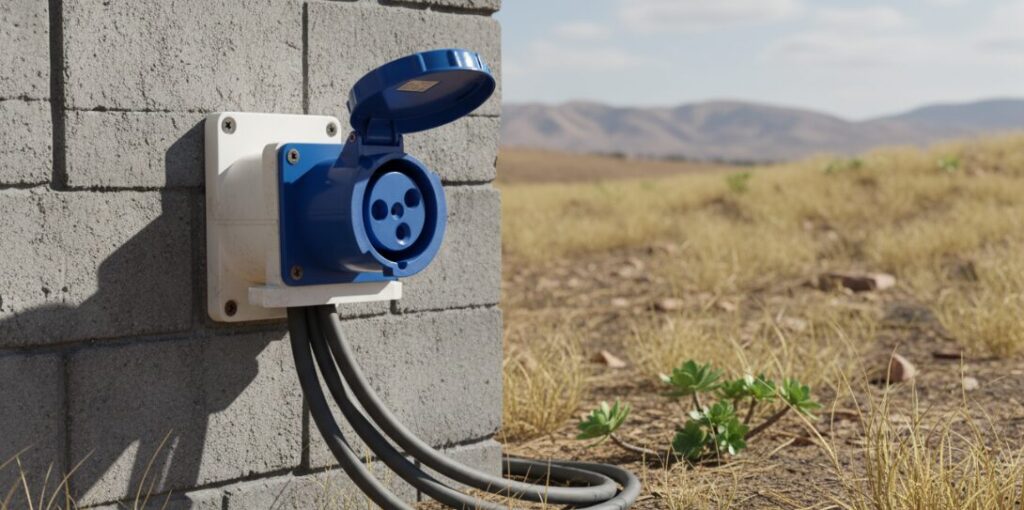
1. Adapt 13A To 32A Circuits
The rated current of the 2.5mm ² cable perfectly fits the typical loads in the garden and around the factory. Whether you want to connect a 13A radial circuit to drive the power tool or extend the 32A ring circuit to the outdoor auxiliary building, this wire diameter can ensure that the wire will not cause safety hazards due to overheating during operation. For users of DTCEE industrial-grade sockets, the use of 2.5mm ² cores ensures that the connection point will never become a bottleneck in power transmission.
2. Overcome Long Distance Voltage Drop
The outdoor socket is usually far away from the main distribution box. When electricity is transmitted in the wire, there is a “pressure loss”, that is, a voltage drop. The 2.5mm ² cable has a lower resistance than the 1.5mm ² alternative. This means that it can minimize voltage drop and ensure that high torque machinery or sensitive electronic equipment inserted into DTCEE industrial plugs can obtain stable voltage and maintain optimal operation.
The Role Of SWA In Mechanical Protection
The “SWA” part of the cable is as critical as the copper core size. Outdoor environments lurk risks that indoor cables will never meet:
Physical impact: SWA cable has a built-in layer of galvanized steel wire, which can protect the internal conductor from spade, rodent bite or extrusion force.
UV and weather resistance: The outer XLPE or PVC cushion is designed for long-term sun exposure. Ordinary cables will become brittle and crack in the sun, while SWA can maintain insulation integrity and prevent short circuits.
Industrial compliance: In industrial locations where DTCEE hardware is used, the mechanical strength of SWA cables is a mandatory standard to meet safety compliance requirements and prevent downtime.
How To Make The Right Choice?
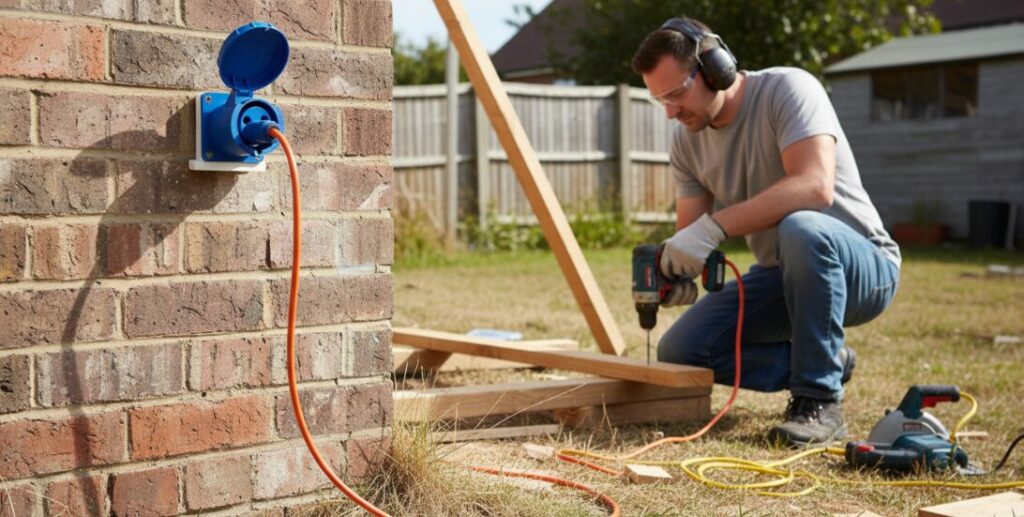
Although 1.5mm ² cables are common in specialized garden lighting circuits, I almost never recommend using them for sockets.
Limitation of 1.5mm ²: This wire diameter is limited to a lower current carrying capacity. If someone plugs a high-power device (such as a high-pressure washer or a high-power electric heater) into a socket with a 1.5mm ² cable, the risk of overheating the cable will increase sharply.
Advantages of 2.5mm ²: Taking 2.5mm ² as a benchmark is actually making “future-oriented investments”. It provides the necessary thermal margin for modern heavy-duty applications, which coincides with the high performance standards pursued by DTCEE industrial plug and socket solutions.
Work With Specialized Hardware To Ensure System Integrity
No matter how good the cable is, it also depends on its terminal connection point. To build a truly professional outdoor power supply scheme, the strength of the 2.5mm ² SWA cable must be matched with high-quality hardware.
For industrial or heavy residential use, pairing the 2.5mm ² SWA cable with a DTCEE industrial socket can ensure:
Excellent IP protection level: dust and water resistance match the durability of the cable.
Stable terminal blocks: The DTCEE socket is designed to firmly lock the 2.5mm ² conductor, reduce contact resistance and prevent heat accumulation.
Long-term reliability: In harsh environments, the synergy of heavy-duty cables and industrial-grade sockets can effectively avoid system failures and reduce maintenance costs.
Author: Mark Steve
“Hi, I’m a technical consultant with years of experience in the electrical supply industry. I specialize in providing practical wiring solutions for residential and industrial projects. I’m passionate about helping contractors and homeowners build reliable systems that withstand the elements and the test of time.”