 datong


Cómo medir la toma de 5 puntos
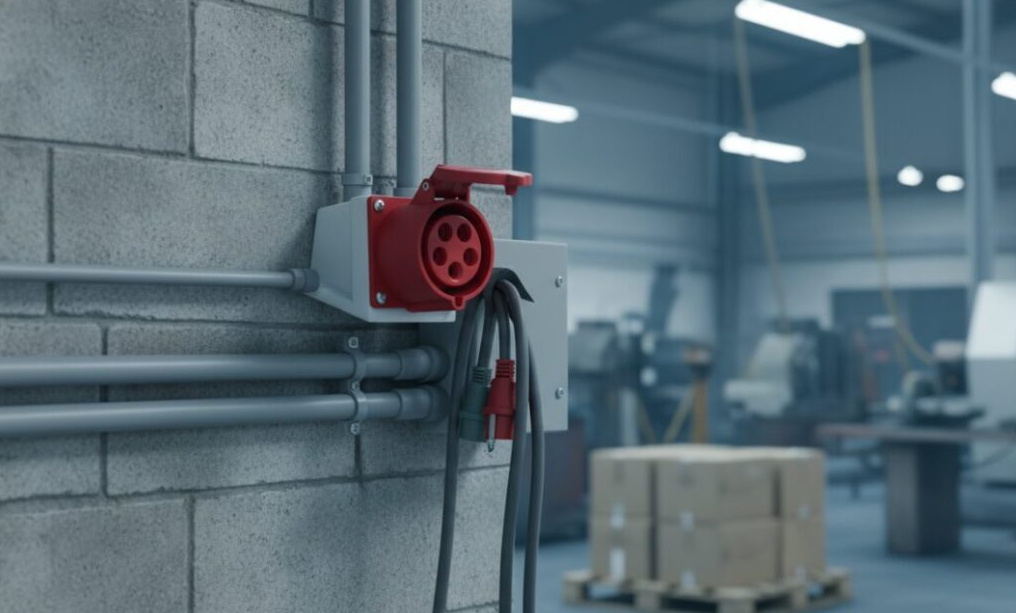
Para ser precisos, este tipo de zócalo se denomina en la industria zócalo industrial de 5 núcleos o 3P+N+E. Si quieres hacer una sustitución perfecta, tendrás que coger un calibre vernier digital y registrar tres dimensiones físicas clave en milímetros (mm): la distancia del orificio de montaje (la distancia desde el centro del orificio del tornillo hasta el centro), el tamaño de la brida (la longitud y anchura periféricas del panel de montaje) y el tamaño de la abertura del panel (el diámetro del orificio de montaje).
Por supuesto, la alineación del tamaño físico es sólo el primer paso. También debe comprobar los parámetros eléctricos impresos en la carcasa de la toma para asegurarse de que la corriente (como la común de 63A o 125A), el nivel de tensión (normalmente la electricidad trifásica de 380V-415V está marcada en rojo) y el nivel de protección (IP44 o IP67) son exactamente los mismos que los de su conector de alta resistencia estándar IEC 60309 original. Esto no sólo está relacionado con que la máquina pueda funcionar con normalidad, sino también con garantizar una seguridad absoluta en el entorno industrial.
Grabación de dimensiones físicas clave
Para fabricar zócalos industriales de 5 núcleos (3P+N+E), la precisión es la vida. Si faltan unos milímetros para llegar a cero, la toma podría morir y el pistón no encajaría en el panel de la máquina existente. Debemos acostumbrarnos a utilizar lecturas en milímetros (mm) en todo momento, y evitar la conversión a pulgadas para garantizar la precisión industrial estándar.
Distancia del orificio de montaje
Este es probablemente el peor tamaño que puede tener un zócalo de tipo montaje en panel. Tienes que medir la distancia entre los agujeros de los tornillos de montaje.
- Cómo medir: Alinee la punta del calibre exactamente con el centro de un orificio de tornillo y tire de él hasta el centro del orificio de tornillo adyacente (es decir, mida de centro a centro).
- Por qué es importante: Si estos datos están torcidos, la nueva toma definitivamente no coincidirá con la posición del orificio pretaladrado en el panel del equipo, y tendrás que volver a taladrar el orificio in situ, lo cual es muy molesto.
Dimensiones de la brida
El reborde es en realidad el borde exterior de plástico rectangular o cuadrado de la toma contra el panel de montaje.
- Cómo medir: Mida directamente la longitud total más exterior y la anchura de la base de la brida de plástico.
- Por qué es importante: La brida tiene el tamaño adecuado y la nueva toma cubrirá con seguridad toda la zona de montaje sin luchar con otros componentes de la máquina hacinados en un bloque a su lado. Debes saber que el espacio interior de los equipos industriales es a veces bastante reducido.
Tamaño de corte del panel
El tamaño del orificio abierto se refiere al orificio redondo grande del panel de la máquina que se utiliza para enchufar en el cuerpo de la toma.
- Cómo medir: Gire hacia la parte posterior del zócalo y mida el diámetro de la base redonda, o simplemente mida el diámetro del orificio del panel.
- Por qué es importante: Si el diámetro del orificio es demasiado grande, el enchufe no se fijará con firmeza; si es demasiado pequeño, el conector de alta resistencia no podrá penetrar en él en absoluto.
Compruebe los parámetros eléctricos de la carcasa
La coincidencia de tamaño físico sólo ganó la mitad. La toma de 5 orificios también debe ser totalmente compatible a nivel eléctrico, de lo contrario equivale a colocar una bomba de relojería in situ. Hay que vigilar que los datos impresos directamente en la carcasa de la toma coincidan con los siguientes parámetros:
Amperaje Capacidad
Las tomas industriales soportan grandes cargas. Por lo general, la corriente nominal, como 63 A o 125 A, está grabada en el lateral de la toma. Al sustituir la toma, la corriente debe ser exactamente la misma, lo que no es negociable. En el peor de los casos, pueden producirse golpes en los equipos, mientras que en el peor, el sobrecalentamiento puede incluso provocar incendios eléctricos.
Tensión nominal y codificación por colores
Según la norma IEC 60309, los niveles de tensión se utilizan generalmente en el mundo con un código de colores específico, que puede distinguirse claramente a simple vista. Este diseño es bastante inteligente.
Si se trata de una toma estándar de 5 orificios (3P+N+E) que gestiona electricidad trifásica de 380 V a 415 V, la carcasa o tapa abatible es definitivamente roja.
Asegúrese siempre de que el nivel de tensión impreso en la carcasa coincide totalmente con el suministro eléctrico de la máquina de su fábrica.
Grado de protección contra la penetración
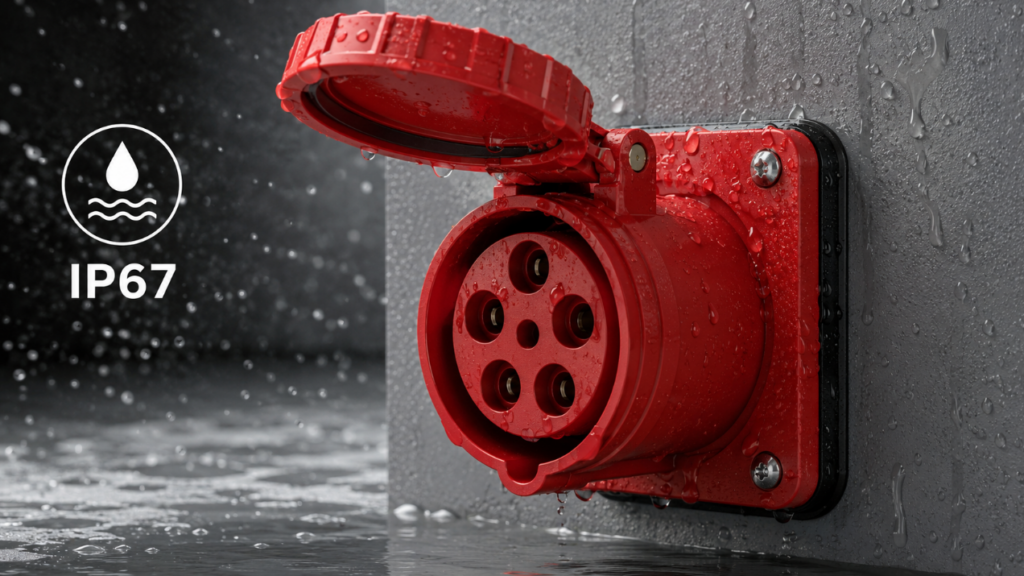
La clasificación IP determina la capacidad de la toma para resistir el polvo y el agua en entornos industriales difíciles.
- IP44: Puede proteger contra materias sólidas extrañas y salpicaduras de agua en todas direcciones. Básicamente, es suficiente para instalarlo en interiores o en un entorno protegido.
- IP67: Proporciona una protección completa contra el polvo y también puede sumergirse en agua durante un breve periodo de tiempo. Este nivel es esencial para la maquinaria pesada que se encuentra en entornos difíciles, húmedos o expuestos directamente a la intemperie.
Nota: Cuando sustituya un dispositivo, el nivel IP de la toma antigua debe ir seguido del nivel de la nueva toma. No destruya las normas de seguridad ambiental originales del dispositivo para ahorrarse problemas.
Garantizar el cumplimiento de las normas IEC 60309
En última instancia, averiguar cómo medir una toma de 5 orificios consiste esencialmente en encontrar un recambio perfecto que cumpla la norma mundial IEC 60309. Utilice calibradores vernier digitales para recortar la distancia del orificio de instalación, la brida y el tamaño de la abertura y, a continuación, controle estrictamente los parámetros eléctricos de 3P+N+E (corriente nominal, marca roja de tensión 380V-415V y nivel de protección IP44/IP67). Si hace esto, el trabajo de sustitución será básicamente infalible.
Sólo siguiendo estrictamente estos pasos precisos in situ podrá asegurarse de que el conector de alta resistencia recién sustituido se conecte a la perfección a la maquinaria y los equipos existentes, y ofrezca garantías de seguridad sin merma para toda la operación industrial.
Autor: Mark Reynolds
Con experiencia en modificaciones de equipos industriales y reparaciones eléctricas, he pasado innumerables horas en fábricas tratando con conectores de alta resistencia. Conozco de primera mano la frustración de recibir piezas de repuesto equivocadas y los graves riesgos para la seguridad de ignorar las normas IEC 60309.