 датун
датун


Почему сокеты искрят
36Отличите безопасную голубую искру от опасной дуги. Узнайте о признаках неисправности розетки и о том, как предотвратить пожар.
Посмотреть деталиПоиск по всей станции
There was no other chooice about this: shut down the power immediately to prevent an accident, lock the switchboard, and then check whether the circuit breaker was out of phase or had blown a fuse. In high-load electrical environments such as industry and commerce, the reason why the socket does not react very much is simply “poor contact”. This is often a fatal warning to you due to thermal overload, three-phase imbalance or environmental corrosion. The first step is always to disconnect the power. Take a multimeter to check to make sure it is really dead, and then check whether the socket is burning, melting or has a burning smell. To say goodbye to equipment downtime and ensure that high-power machines are constantly powered, you must throw away those ordinary sockets. The ultimate solution is to switch to an industrial-grade, waterproof and dustproof plug and socket system designed for high currents (such as 63A or even 125A) and universal voltages around the world.
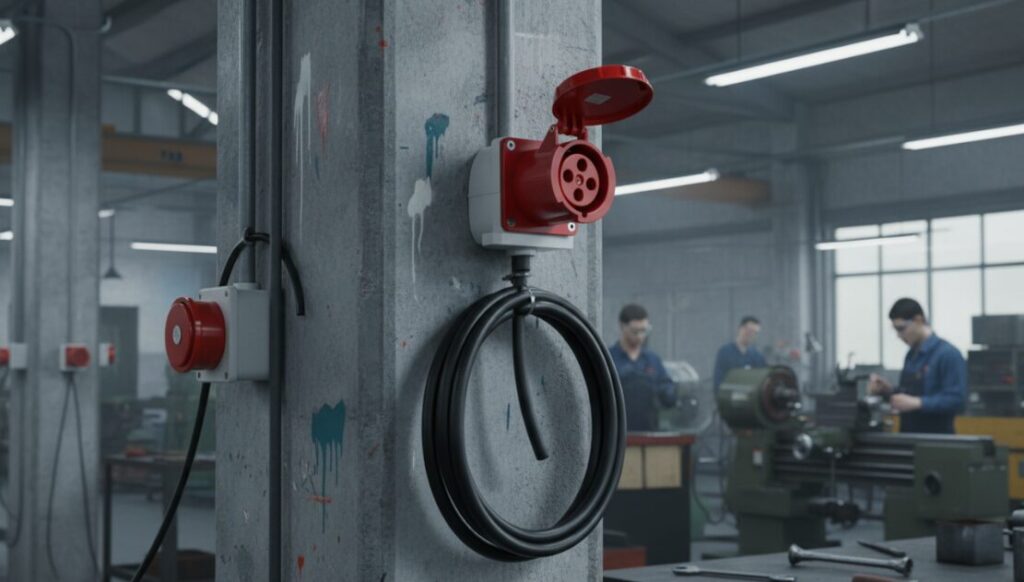
If there is a problem with the power connection in the workshop, the risk factor can be much higher than at home. Industrial machines eat electricity just like they drink water, and a broken socket is often a serious safety hazard.
If you find that the socket is not working, the first thing you need to do is to stop the affected operation immediately. Don’t hard plug it in at this time, or go to the reverse compound gate. The Locking and Ticking procedure must be strictly enforced at the switchboard on site. After locking the power, check the circuit breaker. In a three-phase power system, most of the power is out of phase or the fuse is blown, which means that the power just pumped by the machine has exceeded the safety limit that the line can withstand.
In a business environment, a broken outlet is never accidental; it’s often a symptom of a systemic problem. You have to learn to understand these warning signs:
After ensuring the site is secure and the power is locked, the repairers can start systematically treating the bad socket “for medical treatment”.
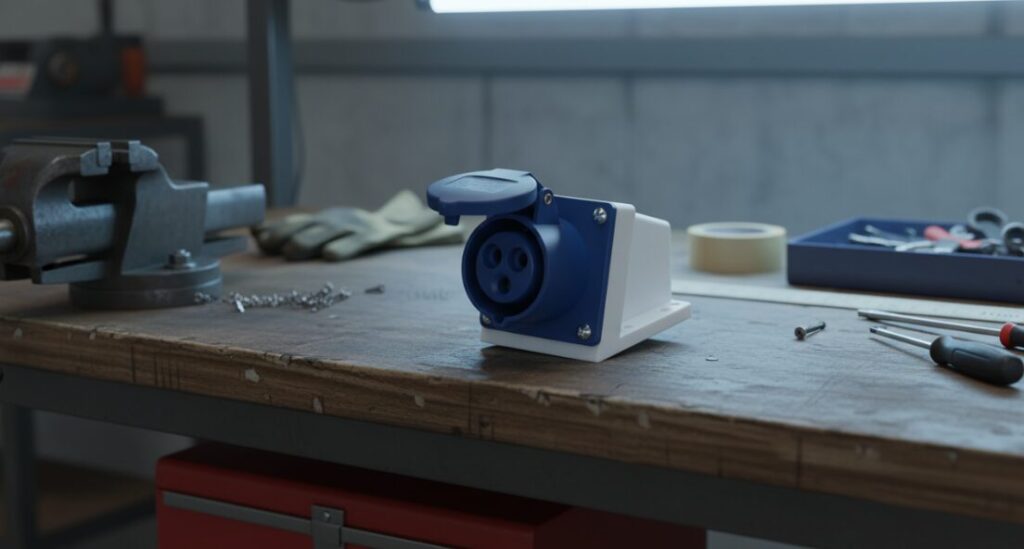
A broken socket cost not only money for a new part, but thousands of dollars in downtime. When everyone is always having a headache “what to do if the outlet breaks”, I think the real question to ask is: How can I not let it break in the first place?
Those standard commercial sockets cannot cope with the global heavy machinery, new energy equipment or the continuous high-load operation. Expecting them to fail often results in inevitable failures and unacceptable downtime. For the power supply to be reliable and continuous, the factory must completely eliminate these substandard connection methods.
In a heavily loaded environment, the only permanent way to deal with frequent socket problems is to give it a complete upgrade. It was necessary to replace it with an industrial-grade plug and socket system designed specifically for the harshest conditions and maximum electricity demand.
You need to keep an eye on these hard, non-negotiable metrics:
Replacing those fragile ordinary sockets with sturdy and durable heavy-duty industrial connectors can eliminate the hidden danger of electrical failure at the root. The machine can run for a while longer, and the power system of the entire factory can be stabilized for a long time.
Author: Mark Davidson
I am an industrial electrical engineer with over 18 years of experience specializing in heavy-duty facility maintenance and power infrastructure. I am passionate about helping factory managers and maintenance teams identify critical electrical hazards before they occur and guiding them toward adopting more reliable, industrial-grade power solutions to maximize uptime and safety.
Отличите безопасную голубую искру от опасной дуги. Узнайте о признаках неисправности розетки и о том, как предотвратить пожар.
Посмотреть детали
Узнайте о существенной разнице между водостойкими (IP44) и водонепроницаемыми промышленными вилками.
Посмотреть детали
Узнайте, как безопасно заменить панель с розетками с помощью этого руководства для экспертов. Начиная с подготовки и заканчивая окончательной установкой, вы будете уверены, что ваш дом останется в безопасности.
Посмотреть детали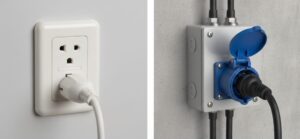
Узнайте, как модернизировать промышленные цепи с помощью моего трехступенчатого руководства: От выключателей до розеток IEC 60309 для максимальной мощности.
Посмотреть детали
ЗдравствуйтеПожалуйста, войдите в систему