 datong


Why Are Some Power Outlets Upside Down
22Learn Why “Upside Down” Sockets With The Ground Pin Up Prevent Short Circuits And Are Standard In Medical And Industrial Sites.
View detailsSearch the whole station
This type of failure is often caused by the two most common “culprits”: either the GFCI socket tripped automatically, or the circuit breaker (air switch) in the main distribution box tripped.
The solution is actually very simple. Check whether there is a “Reset” button on the socket panel, or pay attention to other sockets in the same room. If you find no problem, turn over your distribution box to find out if any switch is in the “Off” position or parked in the middle half hanging position, and push it back to “On. There are some deep-seated reasons, such as loose wiring behind the panel, blown fuses, or you plug too many high-power devices into a patch panel to cause overload. If you smell burning or see the panel discoloration, the probability is short circuit or internal wear, which is a fire hazard, you must immediately replace the industrial-grade socket or certified surge protector, safety this must not make do.
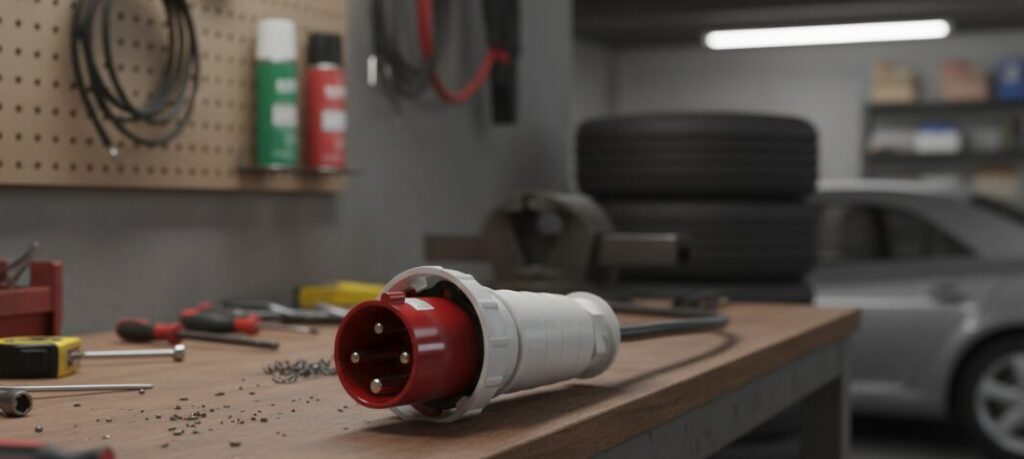
The GFCI is designed to protect you from electric shock. Once it detects a current leak, it cuts off the power momentarily. In places such as kitchens, bathrooms or studios that are prone to damp, no electricity in the socket is often the GFCI’s jump.
Solution: Look at the “Reset” and “Test” buttons on the socket panel. Press the Reset key firmly. If there is still no electricity, don’t forget that a GFCI socket often controls several ordinary sockets downstream.
When all outlets in a area collectively “strike”, the problem usually lies in the main distribution box. The function of the circuit breaker is to prevent the current surge or overload from overheating the wire.
Fault location: open the electric box, scan the times. Look for the guy who is not in line with the other switches, it usually gets stuck in the middle position.
Correct reset posture: Many people push directly to “On”, which is useless. You have to break it completely to the “Off” position, and then push it back to the “On”. If it bounces back as soon as it is pushed up, don’t try hard, this shows that there is a continuous short circuit or serious overload in the line, and the fault must be checked first.
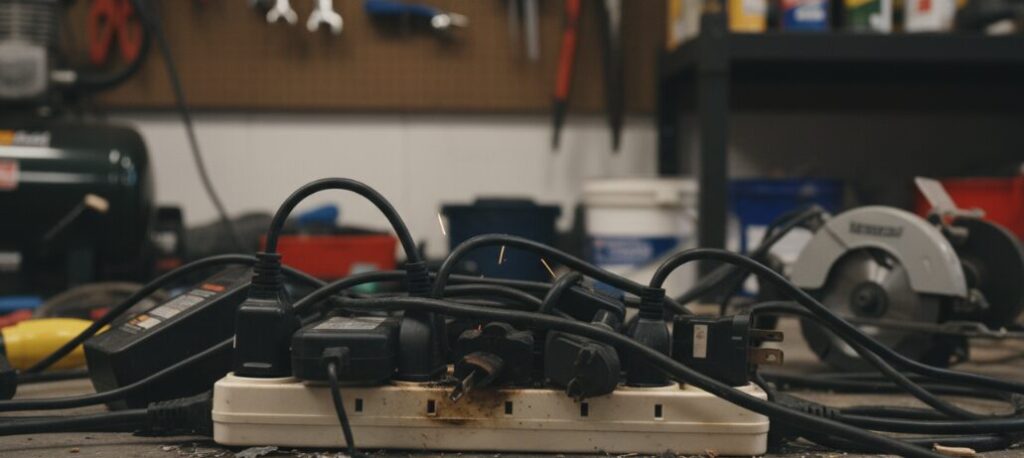
In the modern office or industrial environment, our demand for electricity often exceeds the design limit of a single circuit. No problem if you plug electric heaters, industrial machinery or high-end server into the same patch panel.
The principle is simple: each circuit has an upper current rating (amperage). When the total current of all equipment exceeds this limit, the circuit breaker will trip to prevent a fire.
My professional advice: Spread high-power devices into different loops. For those professional or high-load environments, don’t use the kind of civilian patch panels bought in supermarkets, and upgrade to industrial-grade power distribution units (PDU) or high-quality surge protectors.
Sometimes the problem is with the hardware itself. Over time, the terminals behind them can loosen due to thermal expansion and contraction or initial improper installation.
Loose wiring: Loose wires will produce “arc”, and the current will jump between the gaps to produce high temperature, resulting in intermittent power supply to the socket, and finally completely scrapped.
Short Circuit: A short circuit occurs when the live wire comes into contact with the neutral or ground wire. If you smell the pungent “metallic smell” or “burning smell”, or see black and brown ablation marks on the panel, don’t use it again. This means that the internal wear has been severe or a short circuit has occurred and must be replaced immediately.
When the socket fails due to internal wear and tear, just buy the cheapest hardware and replace it with a temporary cure. If you are looking for long-term security and performance-especially in the high-reliability environment that our DTCEE emphasizes-hardware upgrades are the way to go.
Investing in industrial-grade sockets and certified surge protectors can ensure that your power infrastructure can withstand the high load demands of modern times. These high-end components have better heat dissipation, tighter jack grip (to prevent loose wiring), and advanced surge suppression to protect your expensive electronics from voltage fluctuations. The stability of the power system depends on these details.
Author: Marcus Sterling
“With years of experience in electrical infrastructure and power system stability, I specialize in high-reliability environments—the kind of standards we emphasize here at DTCEE. My mission is to help people move beyond ‘quick-fix’ patches and understand the deeper mechanics of electrical safety. Whether it’s troubleshooting a stubborn GFCI or upgrading a facility to industrial-grade standards, I believe that attention to detail in our power systems is the ultimate insurance against fire hazards and equipment failure.”

Learn Why “Upside Down” Sockets With The Ground Pin Up Prevent Short Circuits And Are Standard In Medical And Industrial Sites.
View details
Is Sleeping Next To A Wall Socket Safe? EMF Is Harmless, But Electrical Fires Aren’t. Read Our Bedside Safety Guide.
View details
Why 2.5mm² SWA Cable Is The Best Choice For Outdoor Power. Ensure Safety, Durability, And Peak Performance.
View details
Learn The 80% Rule For 15A/20A Sockets To Avoid Circuit Overloads And Protect Your Home From Electrical Fires.
View details
HelloPlease log in