 datong


Should You Use Socket Covers
No, you should not use plastic socket covers.Modern high-quality socket itself is designed with a set of precision internal baffle, specifically used to prevent foreign objects from contacting the live terminal. If you force these external plastic pieces, you will inadvertently destroy these self-contained security mechanisms. This will not only support the internal contact points, but also cause the internal connection of the socket to loosen, which can cause overheating, arcing, and even serious fire hazards. From a professional audit perspective, most of these covers are uncertified products that simply do not meet the stringent dimensions required by electrical safety standards. Their use is essentially a false sense of security at the cost of damaging the structural integrity of the socket.
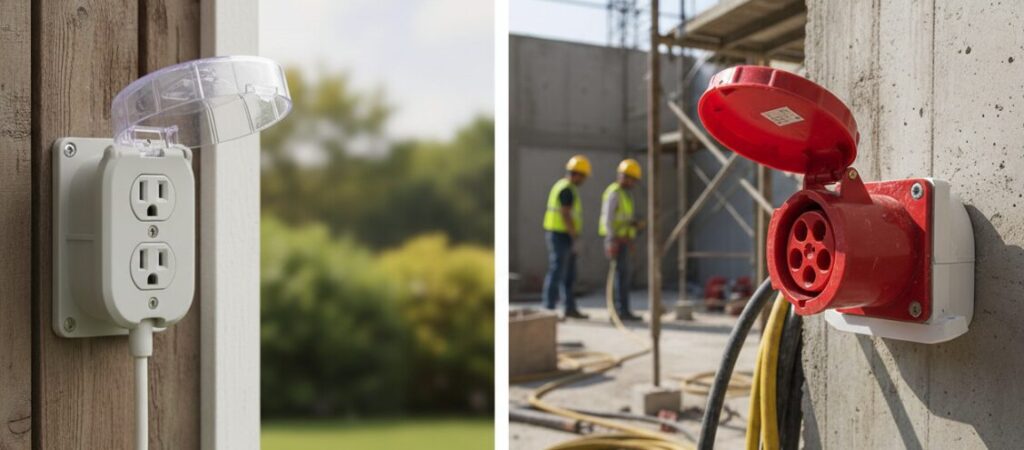
Internal Baffle Mechanism Of The Socket
Modern sockets themselves come with safety genes. Take sockets that meet BS 1363 or equivalent stringent standards as an example. They all have safety flaps inside to seal the holes of the live and neutral wires. These flaps will only open when the ground pin is inserted, or when the live and neutral holes are under equal pressure at the same time. When you force a non-compliant plastic cover in, you’re actually using an unregulated debris to interfere with a precision-designed safety device. This practice is usually the beginning of a hidden danger.
How Does The Protective Cover Destroy Your Circuit System?
Although these protective covers are branded as safety, the mechanical damage they cause to the internal structure of the socket is often irreversible:
- Open the contact piece: the production accuracy of the protective cover is extremely poor, and it often does not meet the tolerance requirements of the standard plug. Inserting them will force open the metal contact shrapnel inside.
- Poor contact: Once the internal shrapnel is deformed by the brace, they cannot tightly grasp the normal electrical plug. When you really need electricity, you will find that the plug is baggy.
- Arc risk: loose connection is the main cause of electrical arc. The current jumps between the gaps and generates extremely high heat, which is one of the most dangerous hidden dangers.
Fire Hazard And Local Overheating
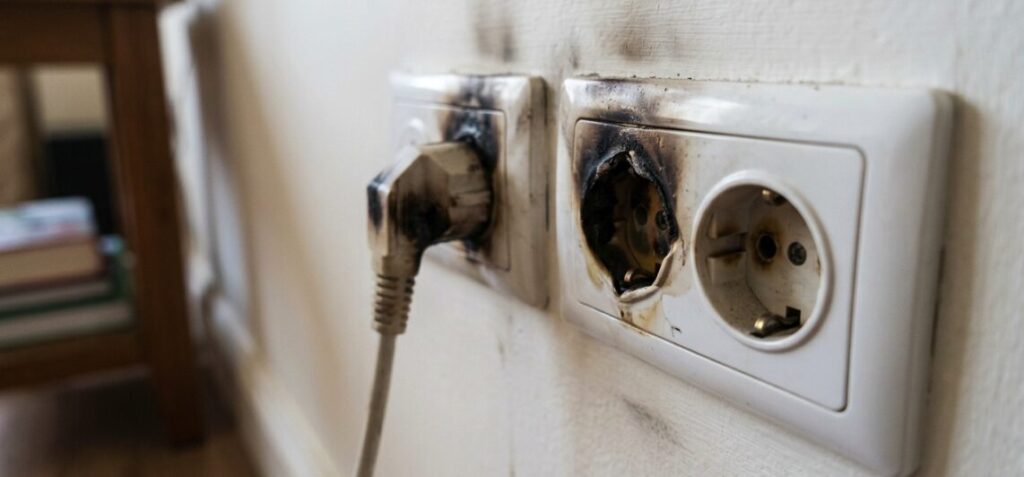
The most critical reason to avoid plastic protective covers is the risk of fire. Because the cover destroys the grip inside the socket, the resulting poor contact can cause rapid local heating. In some of the cases I ‘ve dealt with, the structure behind the socket has been charred, and the air switch on the wall hasn’t even tripped—because the current isn’t overloaded, just the local high temperature caused by poor contact. In addition, these cheap plastic covers are often made of flammable materials. Once a fire starts, they will melt directly into the socket, making the fire more difficult to control.
Uncertified Hidden Dangers
In the field of electrical safety audit, we call this kind of protective cover “ghost product”. The socket itself must pass extremely strict national safety standards, but these plastic covers are:
- Lack of Regulation: They do not belong to any controlled electrical component category.
- Size fallacy: Even if the thickness or length of the pin is 1mm wrong, it will cause fatal injury to the baffle mechanism inside the socket.
Using this untested plastic decoration to bypass a proven security system is logically untenable.
Truly Effective Security Alternatives
- Regular inspection of electrical facilities: Ensure that the wiring in the home is evaluated annually by professionals. A Qualified Electrical Installation Condition Report (EICR) can help you identify aging sockets or poor quality wiring that are really at risk.
- Ensuring RCD protection: Earth Leakage Protection (RCD) is the most important safety switch in modern power distribution boxes. It can cut off the power supply at the moment when it detects leakage (such as when someone accidentally touches a charged body), which is a life-saving thing.
- Replace high-quality anti-misplug sockets: Instead of counting on a plastic plug, it is better to directly invest in industrial-grade or high-quality anti-misplug sockets (Tamper-Resistant Sockets). They come with an extremely strong internal baffle, which is much safer than any plastic external pendant.
Author: Mark Harrison
I am a professional electrical safety auditor with over a decade of experience inspecting residential and commercial power systems. Throughout my career, I have been dedicated to identifying hidden electrical hazards and debunking common safety myths that put families at risk.