 datong


Are Outdoor Sockets Waterproof
No, outdoor sockets are not the kind of “waterproof” devices that can be thrown into water. Their accurate engineering positioning is “weatherproof” or “water-resistant”. From an electrician’s professional perspective, this means that while a standard outdoor outlet can withstand rain, snow, and moisture, its safety depends entirely on two cores: the IP rating and the integrity of the housing seal.
Most home models on the market are rated IP44 or IP66, but keep in mind that these indicators only work if the spring cover and internal sealing gasket are fully closed. To combat the risk of short circuits and electric shock, these sockets must be equipped with GFCI or RCD. Many people make a low-level mistake: leaving the cover open while the plug is plugged in, or allowing the seal to age and crack under UV exposure. At this point, the socket is completely “waterproof”, and all that’s left is a fire and electric shock hazard.
The Difference Between Weather-Resistant And Waterproof
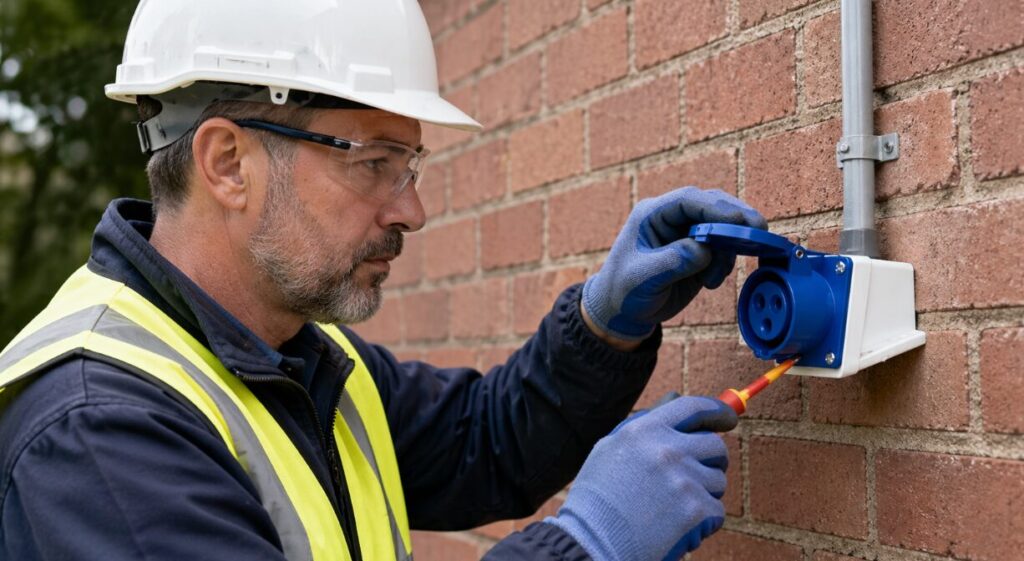
In technical detail, “waterproof” means that the device can be fully immersed in a vacuum-sealed environment. But sockets are inherently designed to have extra holes, and are destined to fail to achieve absolute immersion. So, what we rely on in the industry is “weather-resistant engineering design”.
This logical distinction is crucial when doing outdoor installations. A qualified weather-resistant socket relies on mechanical construction ——such as overlapping seams and a specialized drain slot design—— to ensure that water flowing through the housing does not seep into the internal live terminal blocks. In industrial-grade application scenarios, such as powering renewable energy equipment or heavy machinery, this “weather-resistant” integrity requirement must be raised another level, otherwise if a water leak causes shutdown, the loss will be huge.
Let’s Talk About The Knowledge In IP Level
Whether an outdoor socket is reliable depends entirely on the IP code. These two numbers directly define how much environmental pressure this device can withstand:
First digit: in high quality outdoor units is usually “6”, representing complete dust protection.
Second digit: IP44 rating can only protect against splashes, and is usually only suitable for installation under eaves and other places that cannot be exposed to heavy rain. However, if it is installed on a completely open-air exterior wall or in an area with frequent heavy rain, IP66 is the industry standard because it can ensure that no matter which direction the water flows from, it will be fine.
When dealing with high-load environments, you must ensure that the IP rating matches the strong housing material to ensure that the sealing structure remains stable in the event of mechanical impact or pressure.
Those “Soft Ribs” Of The Sealing Ring And The Housing
I’ve done so many repair cases and found that “housing seal failure” is the most likely place to drop the chain. The upper limit of a socket’s protection capacity actually depends on the ring of washers inside it.
High-quality outdoor sockets use heavy-duty, UV-resistant polymer materials. If you use a defective product to save money, the gasket will become brittle and crack after a few months in the sun. Once the seal is broken, moisture will penetrate into the bottom box through capillary action, eventually causing internal corrosion or even short circuit. In addition, the spring cover is also designed to be too stiff and must be able to spring back and snap to death. In many “in-use” scenarios, even when the wire is plugged in, a special protective cover must be used to ensure that the weather resistance at the wire outlet can still be maintained.
Why GFCI And RCD Protection Are Not Negotiable
Even if you’re using the most top-of-the-line IP66 socket, if someone doesn’t do it right, the shield will still be useless.
These devices are like “electronic monitors” for electricity. Once the water hits the live parts and forms a ground path, they can cut off the power supply within milliseconds. This system is the last line of defense against equipment malfunctions that can turn into fatal electric shocks.
Professional Maintenance Advice For Long-Term Safety
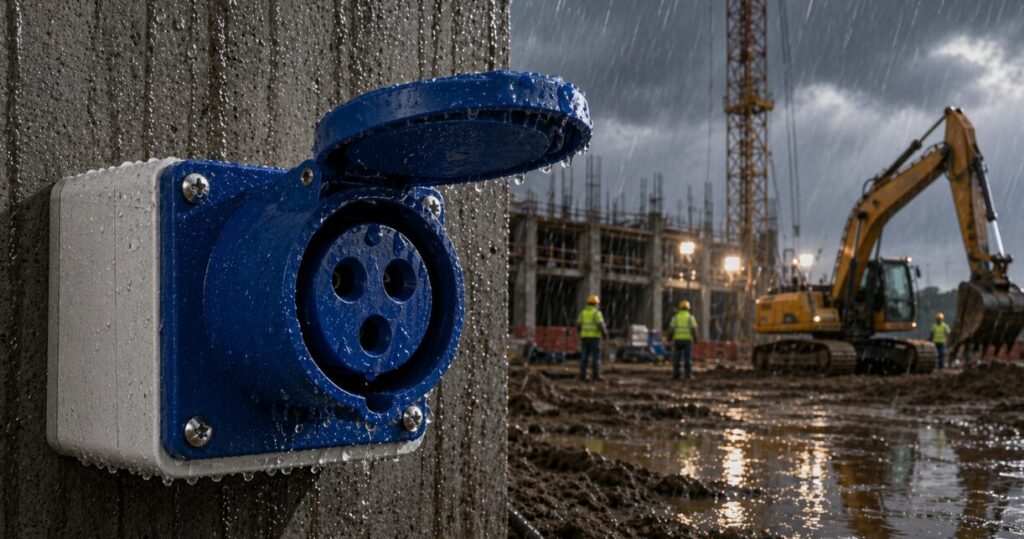
To keep your outdoor outlets in “weather-resistant” condition all the time, regular inspections are a must.
Whether the spring cover still fits tightly after closing.
Internal sealing gasket for signs of aging, hardening, or cracking.
Whether the shell itself has any hairline cracks that may seep into moisture due to impact.
Author: Mark Stevens
My career has been defined by a focus on high-performance distribution systems and uncompromising safety standards. I write to help homeowners and industrial professionals understand the technical limits of their electrical gear, ensuring that every installation remains safe, reliable, and efficient—no matter how harsh the environment.