 datong


Unsure What Does a 220V Plug Look Like? Easy Visuals
220V plugs are usually very “strong”, with 3 or four thick metal pins, generally arranged in a round, L-shaped or with a certain angle, the block is much larger than ordinary household plugs. If you are holding 1 a sturdy wire with strange pin shape in your hand, nine times out of ten it is a 220V plug for large household appliances such as dryers, ovens or tram chargers.
However, guessing the voltage by size alone will burn out your expensive electrical appliances sooner or later. I have seen someone messing around, stuffing the plug into a mismatched socket and scrapping a $3000 espresso machine. In order for you to recognize the plug type in a second and ensure absolute safety, you must keep the following hard-core graphic guide.
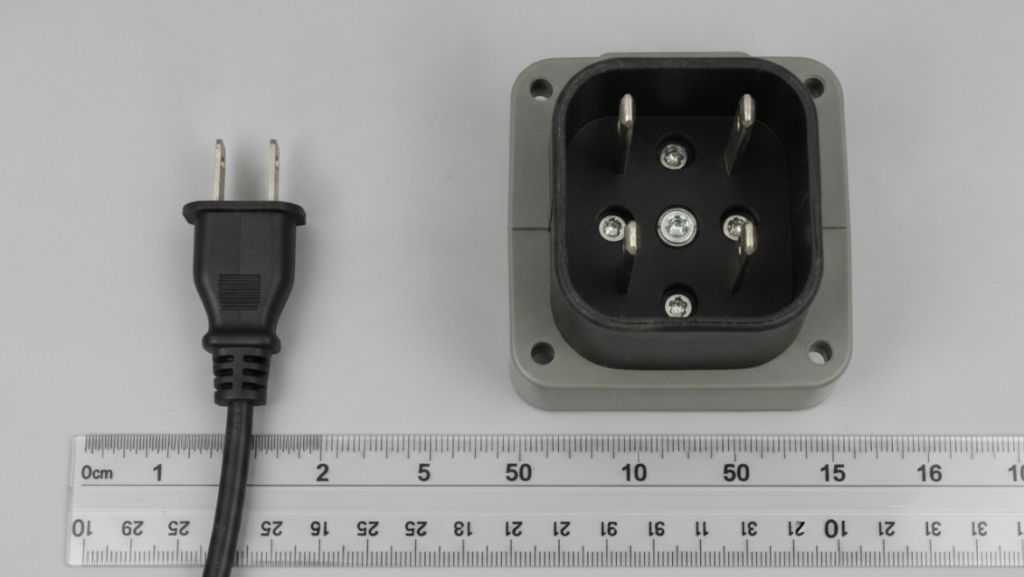
Stop guessing and use the “P.I.P.” visual verification method.
This is the safety checklist that the old electricians had in mind when they confirmed the high-voltage connector on site.
P – Pattern matching (opposite to wall socket):* * 220V plug is extremely “single-minded” and can only be inserted into completely corresponding wall socket. The geometry of the pin must fit the shape of the wall jack.
P – Prongs pins (depending on shape and quantity):* * The flat pin angle of 220V plug is very special (such as V-shaped, L-shaped or horizontal flat). This physical anti-dull design is to prevent you from inserting it into an ordinary 110V wall socket due to your hand shortage.
I – Info-Stamp nameplate (see plastic shell): Turn the plug over and stare at the hard rubber surface. Manufacturers will be specific NEMA specifications (such as “NEMA 14-30P”) and voltage (such as “250V”) directly engraved on the material.
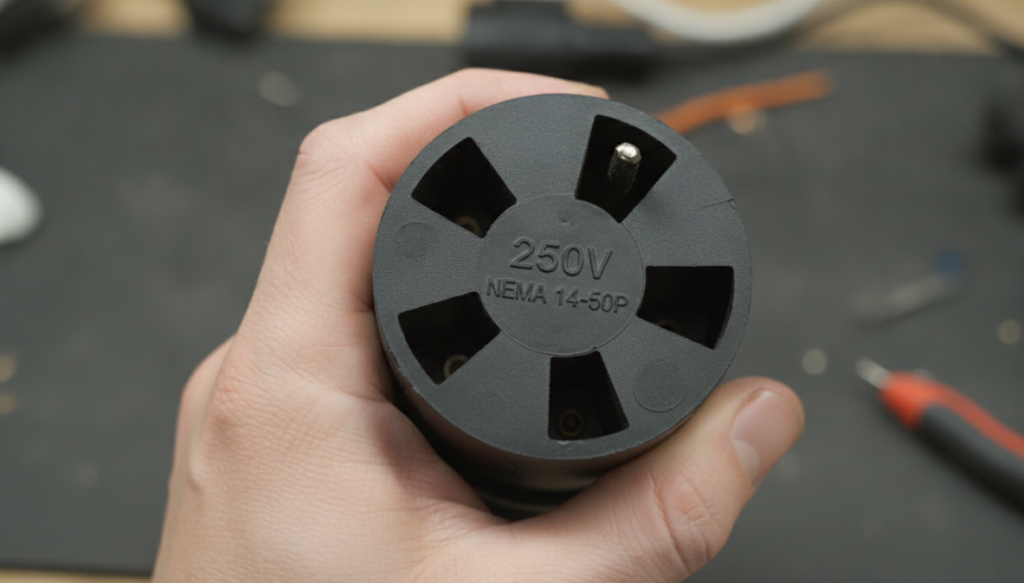
The most common 220V plug (visual illustration)
Instead of memorizing boring electrical specifications, just check the following intuitive categories to see what kind of plug you have in your hand.
4-pin 220V plug (modern standard version)
Now in the newly built houses in the United States, all newly installed large appliances are using 4-pin 220V plugs. The extra special grounding wire can effectively prevent electric shock. You usually see 3 a flat pin with a round or U-shaped pin.
NEMA 14-30 (Dryer Only)
This thing is designed to drive modern dryers. It has two vertical flat pins, a round ground pin at the top and an L-shaped pin at the bottom.
NEMA 14-50 (“Energy Pump” for Tram and Oven)
This is a real heavyweight. It looks almost the same as the 14-30, the only difference is that the L-shaped pin at the bottom is replaced by a vertical straight pin. This plug can carry 50 amps of current to charge a Tesla or carry an electric oven in the kitchen.
3-pin 220V plug (common in old houses)
If the house was built before 1996, the wall is likely to be a 3-pin 220V socket. Although they do not have a separate ground wire, they can still output 220V/240V strong power.
NEMA 10-30 (vintage dryer plug)
This plug has 3 flat pins. The upper two pins are inclined in a “V” shape, and the lower one is a vertical straight pin. If you buy a new dryer for an old house, you usually have to replace the wires on the new machine with this old three-pin plug to use it.
| Plug Name | Prong Count | Visual Identifier | Common Use |
| NEMA 14-50 | 4 Prongs | 3 vertical flats, 1 round top | EV Chargers, Electric Ovens |
| NEMA 14-30 | 4 Prongs | 2 vertical flats, 1 bottom L-shape, 1 round | Modern Clothes Dryers |
| NEMA 10-30 | 3 Prongs | V-shaped top flats, 1 straight bottom | Older Clothes Dryers |
| NEMA 6-20 | 3 Prongs | 1 horizontal flat, 1 vertical flat, 1 round | AC Units, Shop Tools |
Insidewalk warning: deadly “single-foot” trap
Many homeowners often confuse 110V NEMA 5-20 plugs with 220V NEMA 6-20 plugs. Every year because of this inconspicuous small mistake, the damage to appliances caused by the loss of thousands of dollars.
These two plugs look like ordinary household plugs, the only difference is that there is a “horizontal lying” pin direction is different:
NEMA 5-20(110V): The right prong is horizontal.
NEMA 6-20(220V): The left prong is horizontal.
Don’t “make miracles” hard! If it is found that the horizontal pin is not in the right direction and cannot be inserted into the wall anyway, it is a safety barrier specially designed by the manufacturer to prevent you from putting 220 volts of strong electricity into 110 volts of equipment.
FAQ
What if I plug a 110V appliance into a 220V socket?
Instant smoke scrap. The wiring inside the electrical appliance simply cannot withstand the doubled voltage shock. Usually you’ll hear a muffled “bang” 1, then a 1 burnt smell wafts out, and the circuit board is completely dead.
Is the 220V plug 3 feet or 4 feet?
It’s all possible. The old 220V plug (before 1996) used 3 pins, because at that time it was not mandatory to 1 a special ground wire. The current 220V plug must be 4-pin in order to meet the upgraded safety standards.
Why is my 220V plug so much bigger than a regular plug?
Because the current consumed by 220V large appliances is amazing (up to 50 amperes), while ordinary small appliances are usually only 15 amperes. Thicker pins and thicker wires are for quick heat dissipation and prevent the wires from overheating or even melting under huge loads.
Can I buy a adapter and plug the 220V plug directly into a common wall socket?
Absolutely not. Physical conversion heads cannot change the voltage inside the wall. Ordinary sockets can only provide 110V electricity. If you plug in high-power electrical appliances, you will either not be able to turn on the machine at all, or you will barely turn on the electricity but will be half dead, which will suppress the internal motor.
How can I tell if the plug is 220V or 250V?
In North America, when it comes to household appliances, the words 220V, 240V and 250V are basically the same thing and are often mixed together. If your plug is engraved with “250V”, it just represents its “maximum safe working voltage”. Plug it into the standard American 220V/240V circuit to run, very stable.