
 datong


Unsure What Does a 220V Plug Look Like? Easy Visuals
A 220V plug typically features three or four heavy-duty metal prongs arranged in a circular, L-shaped, or angled pattern, and is significantly larger than a standard household plug. If you are holding a thick, massive cable with strange prong shapes, you are likely looking at a 220V connector meant for heavy appliances like dryers, ovens, or EV chargers.
Guessing voltage based purely on size will eventually fry your expensive equipment. I have seen homeowners destroy $3,000 espresso machines by forcing the wrong plug. Below is the exact visual breakdown you need to identify your plug type instantly and safely.
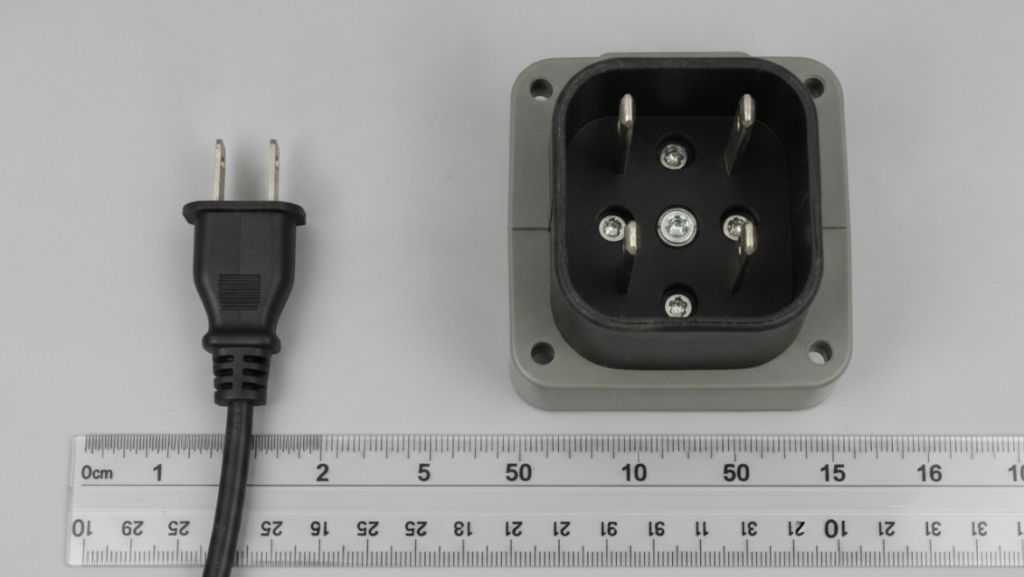
The P.I.P. Visual Verification Method
Stop guessing and use the P.I.P. method. Electricians use this exact mental checklist to verify high-voltage connectors in the field.
- P – Prongs (Shape & Count): 220V plugs use flat blades configured in unique angles (V-shapes, L-shapes, or horizontal flats) to physically prevent you from inserting them into standard 110V wall outlets.
- I – Info-Stamp (Read the Plastic): Flip the plug over and look at the hard rubber face. Manufacturers stamp the exact NEMA rating (e.g., “NEMA 14-30P”) and voltage (e.g., “250V”) directly into the material.
- P – Pattern (Match the Receptacle): A 220V plug will only fit its exact matching wall receptacle. The prong geometry must mirror the wall socket slots precisely.
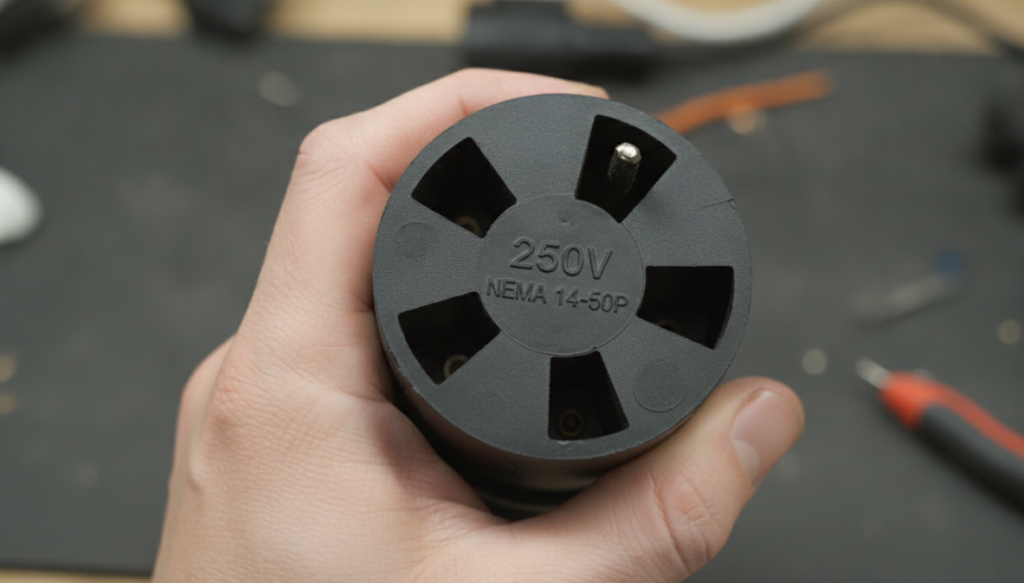
The Most Common 220V Plugs (Visual Catalog)
You do not need to memorize every electrical code. Match your plug to the clear visual categories below.
The 4-Prong 220V Plug (Modern Standard)
Modern US homes use 4-prong 220V plugs for all newly installed heavy appliances. The addition of a dedicated ground wire prevents electric shock. You will see three flat blades and one round or U-shaped pin.
NEMA 14-30 (The Dryer Plug)
This plug powers modern clothes dryers. It has two vertical flat blades, one round ground pin at the top, and one L-shaped blade at the bottom.
NEMA 14-50 (The EV & Oven Plug)
This is the heavy-hitter plug. It looks almost identical to the 14-30 but replaces the bottom L-shape with a straight, vertical blade. This plug handles 50 amps and powers electric vehicles (Teslas) and kitchen ranges.
TuPian ChaRu
(Prompt for designer: A clear, close-up photo of a NEMA 14-50 plug, pointing out the straight bottom blade.)
The 3-Prong 220V Plug (Older Homes)
Homes built before 1996 feature 3-prong 220V receptacles. These lack a dedicated ground wire but still deliver 220V/240V power.
NEMA 10-30 (The Old Dryer Plug)
This plug features three flat blades. The two top blades are angled like a “V”, and the bottom blade is straight and vertical. If you buy a modern dryer for an older home, you often have to swap the cord to match this older style.
TuPian ChaRu
(Prompt for designer: Front-facing photo of a NEMA 10-30 plug. Highlight the V-shaped prong arrangement.)
Quick Visual Cheat Sheet
| Plug Name | Prong Count | Visual Identifier | Common Use |
| NEMA 14-50 | 4 Prongs | 3 vertical flats, 1 round top | EV Chargers, Electric Ovens |
| NEMA 14-30 | 4 Prongs | 2 vertical flats, 1 bottom L-shape, 1 round | Modern Clothes Dryers |
| NEMA 10-30 | 3 Prongs | V-shaped top flats, 1 straight bottom | Older Clothes Dryers |
| NEMA 6-20 | 3 Prongs | 1 horizontal flat, 1 vertical flat, 1 round | AC Units, Shop Tools |
The Expert Warning: The “One-Blade” Trap
Homeowners frequently confuse the 110V NEMA 5-20 plug with the 220V NEMA 6-20 plug. This single mistake causes thousands of dollars in appliance damage every year.
Both plugs look like regular household plugs but with one “sideways” blade.
- NEMA 5-20 (110V): The right blade is horizontal.
- NEMA 6-20 (220V): The left blade is horizontal.
Do not force a plug into an outlet. If the sideways blade is on the wrong side, the manufacturer designed it that way to stop you from shooting 220 volts into a 110-volt device.
FAQ
What happens if I plug a 110V appliance into a 220V outlet?
The appliance will burn out instantly. The internal wiring cannot handle double the electrical pressure. It usually results in a loud pop, smoke, and a destroyed circuit board.
Does a 220V plug have 3 or 4 prongs?
It can have either. Older 220V plugs (pre-1996) use 3 prongs because they lack a dedicated ground wire. Modern 220V plugs require 4 prongs for upgraded safety standards.
Why is my 220V plug so much bigger than normal plugs?
220V appliances draw significantly higher amperage (up to 50 amps) than standard devices (15 amps). The thicker prongs and heavy-gauge wire dissipate heat and prevent melting under massive electrical loads.
Can I just use an adapter to make my 220V plug fit a normal wall outlet?
No. A physical adapter does not change the voltage in the wall. A normal wall outlet only provides 110V. Your heavy appliance will not turn on, or it will barely function, potentially damaging its internal motor.
How do I know if my plug is 220V or 250V?
In North America, 220V, 240V, and 250V terms are used interchangeably for household appliances. If your plug has an info-stamp reading “250V”, it simply means that is the maximum safe voltage rating. It functions perfectly on a standard US 220V/240V circuit.