 DTCEE



220v Outlet Plug: How To Verify A Compatible Match
There is a blue industrial socket on the wall, and there is also a blue plug marked with 220V in the hand. It seems that the size is close, so can it be matched directly? This is the most easily misjudged place when purchasing and replacing. Color and nominal voltage can only help narrow the scope, the real decision is whether the product type, electrical configuration, interface positioning and installation conditions are consistent at the same time.
In the face of 220v outlet plug in the product name, don't rush to find the same price according to the photo. It is often more effective to record the information of the existing socket and the plug to be matched one by one than to compare the outline of the shell repeatedly.
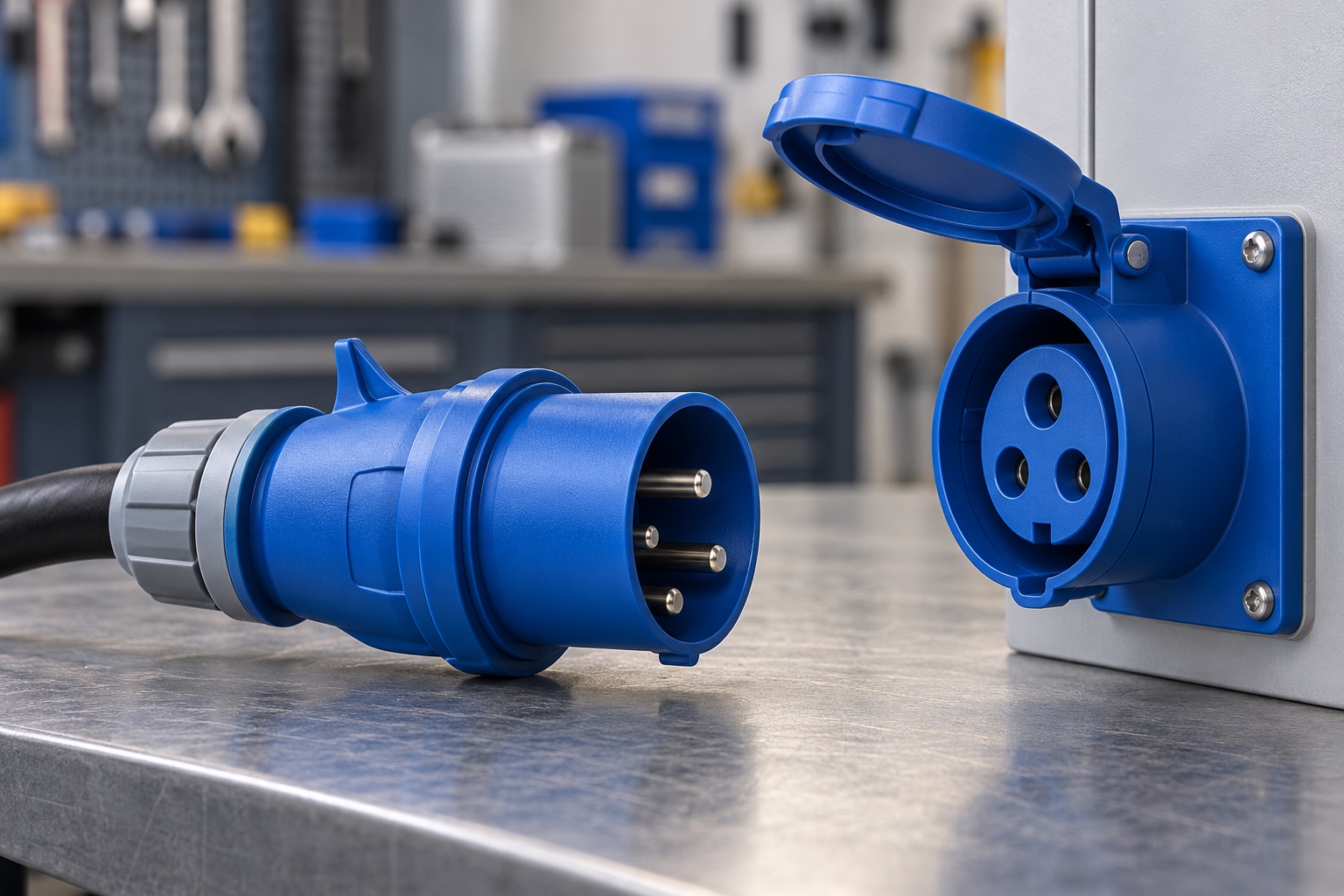
First, Clarify What the Two Ends Actually Are
The end with a pin and usually connected to a flexible cable belongs to the plug. Fixed on the wall, box or equipment installation surface, the internal use of jack contacts and connected to the fixed wiring, is a fixed socket; the market is also often called receptacle. There are also 1 mobile sockets with jack contacts and connecting flexible cables, which can form a detachable connection between the cables with the plug.
Therefore, names like “outlet” and “socket” are still not sufficient. The supplier should be asked to give a clear answer: whether the socket is wall-mounted or panel-mounted, whether it is a fixed wiring end or a cable end; Whether the mating part is a pin end or a jack end. Two pin ends or two socket ends cannot be directly mated, and similar installation positions do not mean that the interface roles are the same.
220V Is Just the First Check
In the common color coding of IEC 60309, 220V, 230V and 240V products usually fall in the range of 200V to 250V, and the common identification color is blue. However, blue is not an independent electrical rating, nor is it sufficient to indicate phase system, pole position, current gear or protection level.
Read the rated operating voltage range and frequency on the product body or reliable technical documents first, and then confirm the allowable input of on-site power supply and equipment. Do not take a "220V" commodity title as a complete specification, let alone the adapter as a transformer; changing the connection form will not automatically change the voltage, frequency, available current, grounding system or load rating.
Look at the Extreme Position, and Also Check the Clock Position
Even if the number of contacts is the same, the functions may not be identical. 2P E represents two current-carrying pole positions plus protective conductor contacts; 3P E represents the 3 phase conductor plus protective conductor; 3P N E also contains neutral conductors. The neutral conductor and the protective conductor bear different functions and cannot be substituted for each other.
In the common configuration of 50Hz or 60Hz, 2P E, 200V to 250V accessories adopt the 6h position, while 3P E, 200V to 250V accessories adopt the 9h position. They may both be blue, but they are not interchangeable. When looking at the front interface, in addition to the number of pins or sockets, check the contact position, key position and contact arrangement of the protection conductor. If the nameplate, color and interface positioning conflict with each other, the selection should be suspended instead of trial insertion verification.
The Rated Current Must Correspond to the Series
16A, 32A, 63A, and 125A accessories have their respective rated current sizes and should not be considered to be interchangeable because of the same voltage color. There are also different rating series in IEC 2010279.88cm inch system. Series I commonly uses 16A, 32A, 63A and 125A, while Series II uses ratings such as 20A, 30A, 60A and 100A. Close numbers do not represent the same specification.
The rated current of the plug and socket is not equal to the actual current of the equipment, and it cannot replace the check of cables, terminals, upstream protection devices and power supply circuits. Selecting accessories with higher current ratings does not automatically increase the carrying capacity of smaller cables or lower rated counterparts. For motor, welding machine, transformer and other loads, the starting process and working system should be considered according to the equipment nameplate and circuit design, only according to the stable power estimation is not reliable.
Being Able to Insert Does Not Equal Full Compatibility
After confirming that one side is a pin and the other side is a jack, check whether the two sides belong to the same standard system, and compare the rated current, pole number, voltage, frequency, clock position and key position item by item. Products of different manufacturers can only be further evaluated for interfitting if the standards, dimensional compatibility requirements and complete electrical configuration are consistent; flanges, bottom boxes, covers, seals and locking accessories may still not be interchangeable.
In case of unnatural insertion, the operation shall be stopped and the model shall be rechecked. Cutting the key position, removing the positioning structure, modifying the contact or forcing the insertion will bypass the original anti-misinsertion design. Even if it is mechanically pluggable, it is not sufficient to prove that the connection meets the target environmental, load and compliance conditions.
Don'T Miss the Protection and Installation Status
The A, B and C series catalogs of the general system list IP44 and IP67 products, but it is not enough to compare only two numbers when selecting the type. IP44 corresponds to the specified solid foreign body and splash water protection, IP67 includes dust protection and temporary immersion protection under specified conditions; IP67 does not mean that long-term immersion is allowed, nor does it automatically mean that it can withstand high-pressure cleaning, corrosion or mechanical impact.
The protective status of the complete connection also depends on whether the plug, socket, cover plate, lock ring, gasket, cable seal and unused inlet plug are assembled as required. The protection conditions at both ends are different and should be evaluated on the lower or more restricted side. For fixed sockets, it is also necessary to obtain the dimension drawing of the accurate model, check the flange, opening, fixing hole position, rear wiring space and cable bending space after insertion, and do not replace the dimensions of other specifications of the same series.
Format the Inquiry Information into Verifiable Specifications
Before placing an order, put the standard system, official product type, pin or jack end, rated current, operating voltage range, frequency, 2P E or other complete pole position, clock position, IP status, wall or panel installation method, and the complete model of the existing mating parts in the same inquiry information. If it is a replacement, add a clear nameplate photo, front interface photo and manufacturer's matching list.
If the supplier can only confirm "blue, 220V, same shape", it is still not enough to determine the model. Wait until the complete model and pairing relationship, cable and terminal conditions, installation size and protection status of both parties can be matched one by one, then arrange wiring and installation.