 datong


Comment augmenter la puissance d'une prise de courant
Pour augmenter la puissance de sortie d'une prise, il faut commencer par augmenter la capacité de l'ensemble du circuit. La vérité est simple : la puissance (watts) est le produit de la tension et du courant.
Tout d'abord, il faut remplacer le disjoncteur du coffret de distribution par un disjoncteur plus puissant (63 ou 125 A, par exemple) afin de supprimer la limite de courant ; ensuite, il faut redessiner la ligne, passer à des câbles plus épais avec des spécifications plus élevées (mesurées en AWG ou en mm²) afin de résoudre les problèmes de chute de tension et de production de chaleur causés par l'augmentation du courant ; enfin, il faut installer des prises industrielles haute performance conformes aux normes IEC 60309 au niveau des bornes. Cet ensemble de processus est essentiel, et ces connecteurs robustes sont spécifiquement conçus pour un fonctionnement soutenu et à forte charge, ce qui garantit que votre machine fonctionne au maximum de ses performances plutôt que de tomber en panne et même de déclencher un incendie.
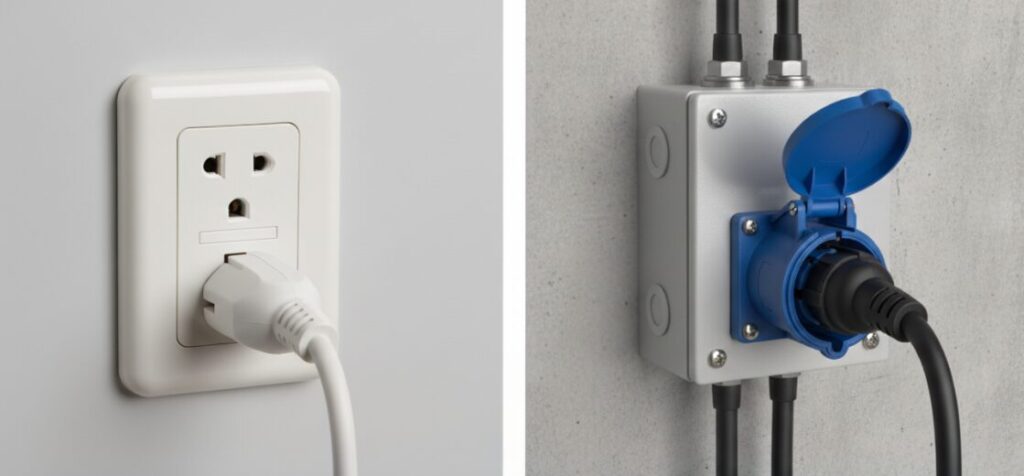
Étape 1 : Améliorer le disjoncteur pour augmenter la capacité de courant
Pour rendre la prise plus “puissante”, il faut d'abord résoudre le problème de la source de distribution de l'électricité. Le disjoncteur du boîtier de distribution joue le rôle de “gardien de but”. Si votre machine industrielle ou votre équipement de production d'énergie renouvelable nécessite plus de watts que ce que votre système existant peut supporter, le simple fait de changer le panneau de prise de courant est une tromperie.
Pour augmenter la puissance totale, vous devez faire passer le disjoncteur à un niveau de courant plus élevé, tel que 63A ou même 125A. Cette action de mise à niveau élargit essentiellement le “flux” d'électricité. En remplaçant les disjoncteurs par des disjoncteurs à courant nominal élevé, vous fournissez à l'ensemble du système la capacité brute dont il a besoin pour alimenter des charges industrielles lourdes, de sorte que les arrêts fréquents du système ne soient pas provoqués par des surcharges de courant.
Étape 2 : Remplacer le câble à fil épais pour éviter la surchauffe et la chute de pression
Une fois que le disjoncteur a libéré la limite de courant, l'infrastructure responsable de l'acheminement du courant - c'est-à-dire les fils - doit également être renforcée de manière synchronisée. C'est la deuxième étape : la repose du câble le plus épais (généralement en AWG ou mm²).
Je vois souvent des gens sur le chantier qui essaient de faire passer des fils ordinaires à 63A ou même 125A, ce qui est jouer avec le feu. Si l'on fait passer un courant important dans un fil fin, il en résultera une chute de tension importante et, plus dangereux encore, un échauffement violent du câble. En optant pour des câbles de gros calibre conçus pour les charges industrielles, vous pouvez vous assurer que la puissance accrue est acheminée en toute sécurité du coffret de distribution au terminal. Plus le câble est épais, plus la résistance est faible, ce qui permet d'éviter une dangereuse accumulation de chaleur tout en garantissant que l'extrémité de l'appareil reçoit la pleine tension.
Étape 3 : Installer des prises industrielles haute performance IEC 60309 pour faire face à des charges élevées continues
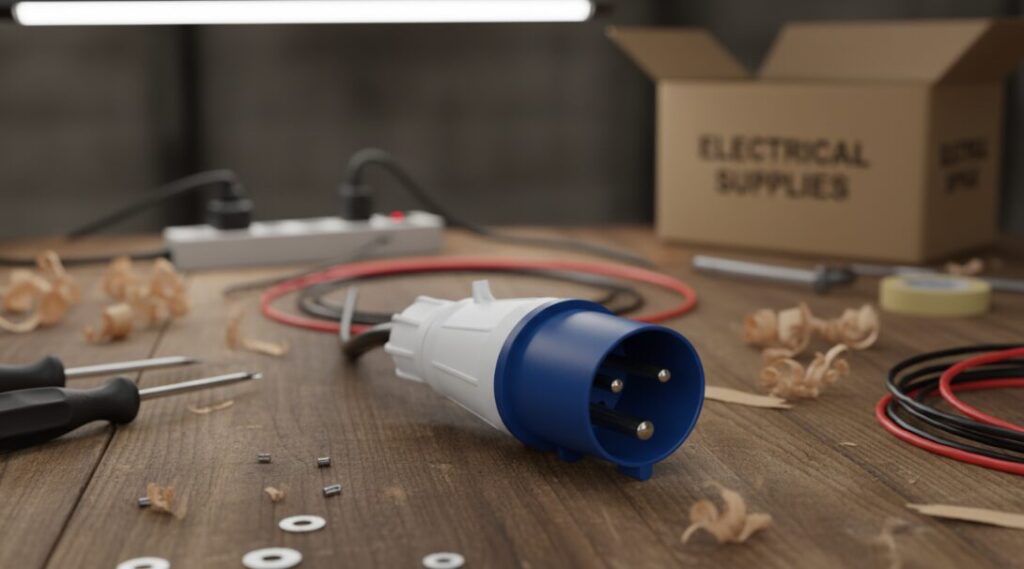
La dernière étape, et la plus critique, consiste à installer des prises industrielles de haute performance à l'emplacement du terminal. Pour acheminer en toute sécurité l'énergie soulevée vers la machine, la prise doit être conforme à la norme internationale IEC 60309.
Les prises domestiques ne peuvent tout simplement pas résister à des conditions d'utilisation extrêmes, et ces connecteurs robustes sont spécialement conçus pour fonctionner sous la charge élevée et constante des environnements commerciaux et industriels. Les prises industrielles haute performance garantissent une connexion étroite et stable entre l'alimentation et l'équipement. Une fois que vous avez effectué cette mise à niveau du système en trois étapes et que vous l'avez équipé de prises industrielles conformes, vous avez essentiellement éliminé le risque d'incendie électrique, résolu les problèmes de déclenchement et garanti que votre équipement fonctionne au maximum de ses performances.
Auteur : Chen Lee
Je suis un spécialiste senior des systèmes électriques avec plus de 11 ans d'expérience pratique dans la distribution d'énergie commerciale et industrielle. Mon approche consiste à combiner les performances maximales des équipements avec une sécurité électrique sans compromis. Je suis passionné par le partage d'informations pratiques et testées sur le terrain pour aider les ingénieurs et les gestionnaires d'installations à naviguer dans les complexités des systèmes d'alimentation électrique à haut rendement.