 datong


How High Sockets From Floor
In the electrical layout of industrial and commercial facilities, the exact height of the socket from the ground (what we often call AFF – Above Finished Floor) is not a number determined by a pat on the head. For general office areas, standard heights are typically between 12 and 18 inches (300 and 450 mm). The optimal height must be raised to 40 to 48 inches (1000 to 1200 mm) in a professional workshop, warehouse, or high-intensity production area. This height increase is essential not only to avoid the obstruction of the workbench, but more importantly to prevent mechanical damage caused by heavy equipment and reduce the risk of water accumulation or dust intrusion common on industrial sites.
While the NEC (National Electrical Code) doesn’t mandate a uniform height for all wall outlets, you have to keep an eye on OSHA’s protocols and ADA (American Disability Act) compliance requirements ——the ADA requires an operating range of 15 to 48 inches. Especially in high-traffic or wet places, the socket must be installed higher and must be paired with a high-IP grade industrial plug socket with a protective cover. In this environment, the use of heavy-duty, waterproof and dust-proof protective covers is a non-negotiable requirement. This is related to long-term operational safety and is also the key to whether you can pass the strict electrical acceptance.
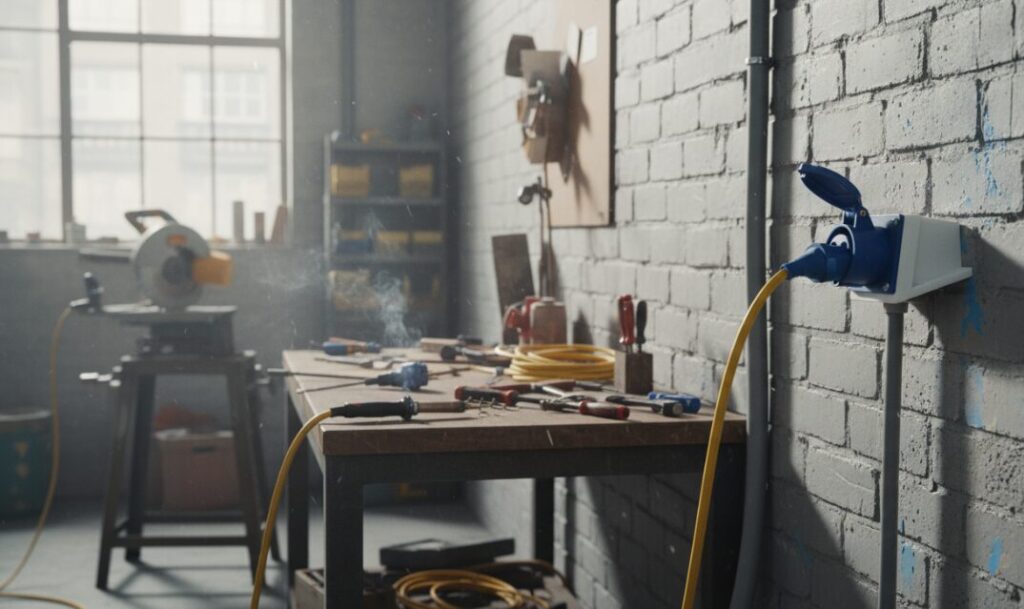
Deep understanding of socket height requirements
When planning an electrical blueprint for a facility, “Above Finished Floor (AFF)” is the standard language within the industry. Choosing the right height isn’t just about ease of plugging and unplugging; it’s actually about finding a balance between ergonomics, regulatory compliance, and device life.
Universal Area
In administrative office areas or commercial corridors in industrial plants, sockets are typically installed at 12 to 18 inch (300 to 450 mm) locations. This height is more than adequate for low-power devices and allows cluttered cables to fade out of sight as much as possible. But in the context of heavy industry, this height is often insufficient because there are too many safety hazards on the ground and it is easy to get into trouble if you are too close to the ground.
Workshop And Heavy Duty Environment
By the time of a professional repair shop or production line, the height increases significantly to 40 to 48 inches (1000 to 1200 mm). This “waist-high” arrangement is based on three core considerations:
- Workbench convenience: Power is provided directly above the tool table, saving you the trouble of privately pulling the terminal block, that thing is the most dangerous hazard on the jobsite and workshop.
- Mechanical protection: Industrial plugs are very expensive, and installing them higher can effectively prevent them from being directly smashed by forklifts, hydraulic trucks or carts.
- Environmental safety: Effectively reduces the risk of moisture, chemical splashing and heavy dust accumulation on the ground.
Compliance And Safety Standard
It is basic to understand the legal requirements.
- NEC (National Electrical Code): The code gives a lot of flexibility in where wall sockets are installed, but it emphasizes one thing: the environment determines the type of equipment.
- ADA (American Disability Act): To ensure accessibility, the ADA requires that the operable portion of the outlet must be within 15 to 48 inches. Setting the industrial socket in the 40-48 inch position is just the right amount of time to meet industrial safety while complying perfectly.
- OSHA regulations: OSHA is focused on workplace safety. In wet or high-flow industrial areas, OSHA often requires higher installation heights to prevent “object strikes” damage and electrical short circuits caused by environmental factors.
Why High IP Grade Industrial Sockets With Covers Are Indispensable
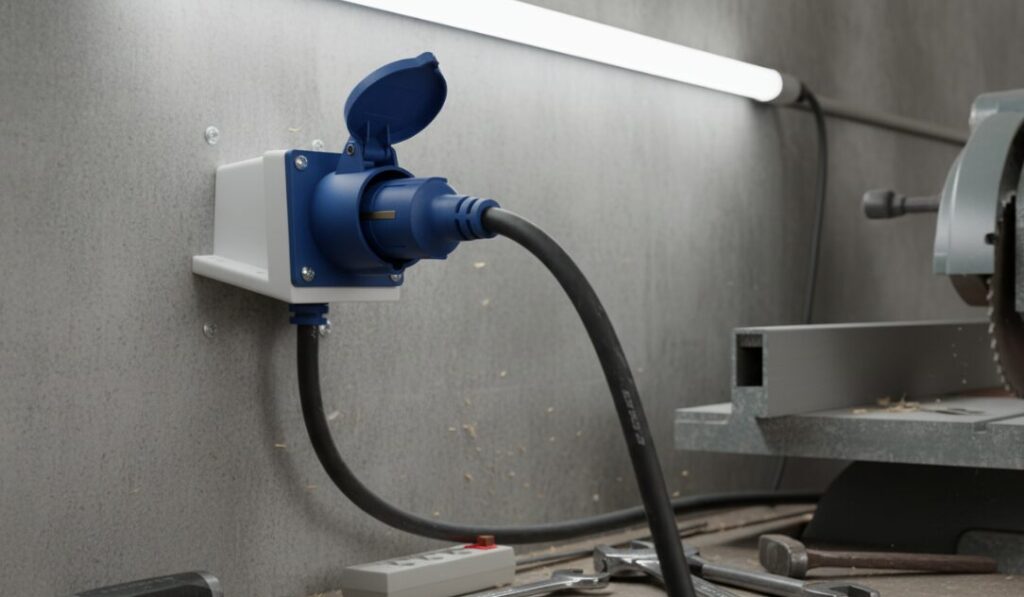
No matter how tall you install it, the harsh realities of the industrial environment ——whether it’s a food processing plant, a construction site, or a warehouse—— mean that ordinary sockets simply can’t handle it.
Protection against water vapour and dust
Even when installed at the recommended height of 48 inches, the socket remains exposed to airborne particulate matter and high-pressure flush guns. That’s why industrial plug sockets like DTCEE, which have a high IP (protection rating), become crucial. By using these high-quality components, you can ensure that:
- Dust resistance: Fine particles cannot penetrate into the connection site, thus preventing arcing inside.
- Waterproof Reliability: The design with protective cover ensures that electrical integrity is not compromised even in the flushing area.
The key role of the protective cover
The security of a socket depends largely on its cover. In industrial scenarios, protective covers are not optional but mandatory safety features. It provides:
- Safety in non-use condition: Prevent personnel from accidentally touching live parts.
- Long-term durability: Protects internal contact points from corrosion and oxidation.
- Acceptance pass rate: Facilities that use high-quality, covered industrial sockets often pass the rigorous electrical safety inspection at once, saving a lot of trouble.
Balance Of Height And Protection
Determining exactly what the “socket height above the ground” is depends entirely on your specific industrial application scenario. 12-18 inches is fine for boroughs, but 40-48 inches is the “gold standard” for active industrial areas.
To ensure your infrastructure is hardcore enough, height is only half the battle. Combining the correct installation height with industrial plug sockets like the one provided by DTCEE with heavy-duty protective covers and high IP ratings is the only positive solution to ensure production continuity and workplace safety.
Author: Marcus Vance
“I am an electrical infrastructure specialist with over 12 years of hands-on experience working on the front lines of heavy-duty industrial environments. I am a firm advocate for rigorous safety standards and high-quality hardware, such as DTCEE industrial components, to prevent mechanical damage and ensure long-term operational continuity.”