 datong


Is A Cracked Plug Socket Dangerous
In these years of electrical safety inspection work, I have seen too many landlords and property managers regard cracks on the socket panel as “small defects”. This is not only a fire hazard that may break out at any time, but also a serious risk of electric shock. In the residential or commercial property you manage, panel damage is not an “aesthetic problem”, but a complete failure of the physical structure of the insulation barrier.
When the plastic shell is damaged, it loses the ability to hold the internal terminals, which in turn causes “arcing”-that is, the current jumps between the gaps. The resulting heat is high enough to ignite the surrounding building materials. Even small cracks can allow dust and moisture to creep into live parts unnoticed, greatly increasing the risk of a short circuit or lethal electric shock. From professional standards , letting a damaged outlet continue to operate is a serious violation, and may even cause your property insurance to lapse. What you should do now is to immediately go to the distribution box to cut off the power supply of that circuit and find a professional electrician to replace it completely.
The Intrinsic Logic Of Structural Failure
The shell of the socket is not only for good looks, it was designed to provide critical mechanical support for the internal electrical contacts. Once a crack occurs, the structural integrity of the entire component is lost. Especially in commercial or industrial environments where it is often necessary to plug and unplug highly loaded machines, this instability can lead to misalignment of internal metal components. This displacement is often a precursor to a catastrophic accident, because the socket can no longer maintain a safe and tight pressure connection with the plug pin.
The “Arc” Crisis That Must Be Paid Attention
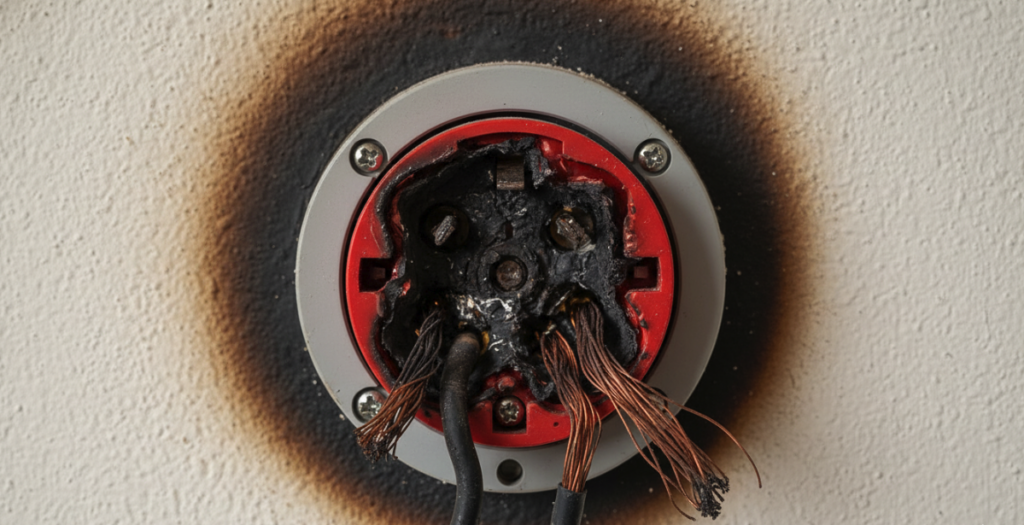
The arc I just mentioned was actually caused by a cracked outlet, which led to loosening of the internal terminals. When the current passes through these loose connections, the electricity will forcibly “jump” through the gap, creating a violent local heat source. In property management circles, we call this phenomenon the “silent killer” because the arc occurs behind the panel and is usually invisible. You usually don’t notice a big problem until the shell starts to smoke or the material in the wall ignites.
Penetration Of Pollutants Into Energized Components
Cracks, open the door to environmental pollutants. In industrial workshops or commercial kitchens, dust, debris and moisture in the air can drill into the inside of the socket along the smallest gaps. These things tend to be conductive, and once they build a “bridge” between the live part and the ground, they will trigger a short circuit. This is more than just a tripping power failure, which means that anyone who touches this socket faces a very high risk of fatal electric shock.
The Stakeholder Interests In Compliance And Insurance
As a regulator, compliance with standards such as NFPA 70 or BS 1363 is mandatory and not negotiable. These procedures explicitly require that electrical equipment must be maintained in a “sound and safe” condition. In the field inspection, as long as you see the cracks visible to the naked eye, I will usually directly determine as unqualified. Moreover, insurance companies are very picky when settling claims, and most policies have “due diligence” clauses. If the fire investigation finds that the fire is a damaged but neglected socket, the insurance company is likely to refuse compensation directly, and in the end you will have to bear all the losses and legal lawsuits yourself.
Why Must A Professional Be Hired For The Replacement
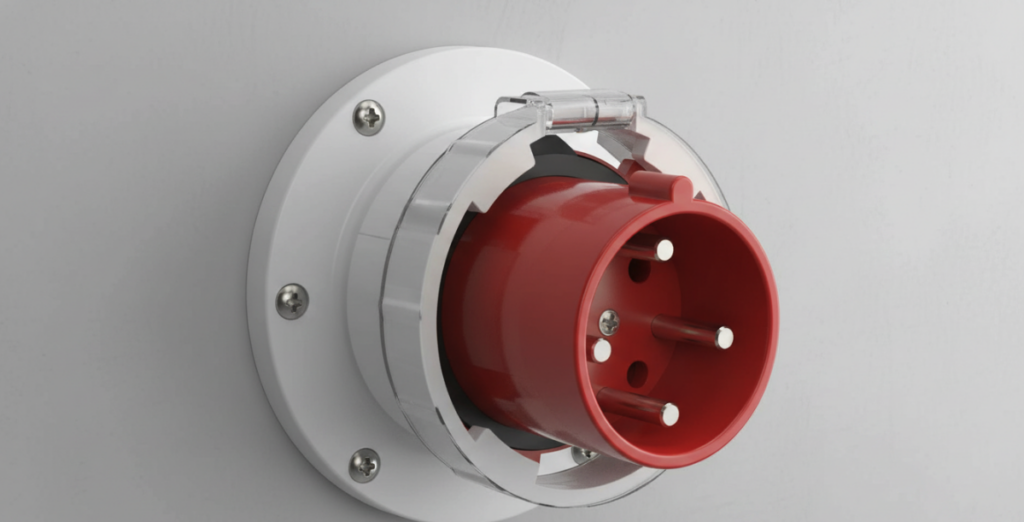
Finally, I would like to remind you not to use any insulating tape or glue to repair. Since the danger stems from the structural failure of the shell, the glue will certainly not restore the insulating properties and will not provide the necessary mechanical strength. The only safe way is to completely isolate the power supply and ask a professional electrician to replace it as a whole. For those places that require high-intensity power distribution—such as the environment that runs global machinery or new energy systems—it is the right way to replace high-intensity, industrial-grade sockets. Such products can withstand greater mechanical pressure. Prevent future cracking problems from the root.
Treat the socket crack as an emergency safety incident, rather than throwing it into the ordinary repair form and eating ashes. Ensuring long-term operational safety and full compliance is the wisest way to manage a property.