 datong


Cosa fare quando la presa scintilla
If you see a spark from the socket, the first and most critical step is to stop it immediately and stay calm. If the electrical appliance is plugged in, as long as you don’t see the wires exposed and feel safe, pull out the plug to disconnect the circuit. But if you have seen smoke, smelled pungent burnt smell, or even seen an open flame, don’t touch the plug! At this time, directly rush to the distribution box, push the circuit breaker of the corresponding room to the “Off” position, and cut off the power supply from the source. After the power is off, check the socket carefully: see if there are any burnt black marks, plastic discoloration or residual paste smell. Even if it is only a small blue light, as long as the spark is yellow or flashes continuously, there is a serious short circuit, loose wiring or moisture inside. Before looking for a professional electrician to check clearly, never try to restore power supply or continue to use this socket, because forced electricity with failure is the number one cause of electrical fire and electric shock accidents.
Find Out The “Why” Behind The Spark
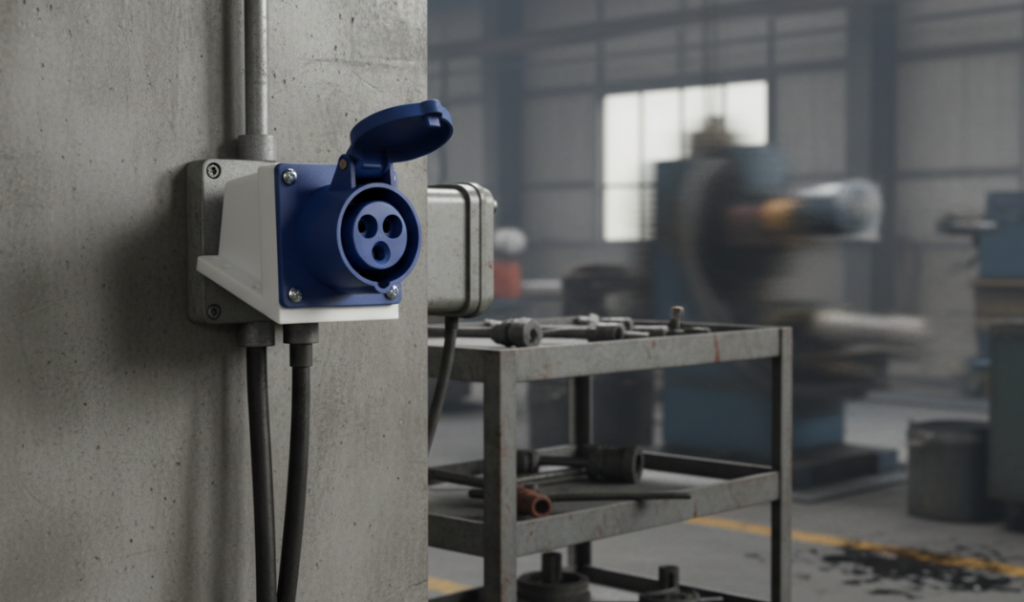
The blue flash that flashes is called arc, which usually occurs at the moment when you plug and unplug high-power equipment, and the current is eager to complete the loop. This is very common. But if the spark turns yellow or orange, the nature changes, which means the heat has soared to dangerous levels. Especially in the field of global heavy machinery or new energy equipment, this “dangerous spark” often signals clearly: the contact points inside the socket can no longer be closely engaged.
After turning off the switch, the appearance of the socket can tell you a lot of information.
Scorch marks: If there is black or brown soot around the jack, it means that the arc flashover has occurred repeatedly inside, and the heat generated is enough to carbonize the plastic.
Plastic discoloration: If it is found that the socket panel is deformed, twisted or yellowed, the internal temperature has long exceeded the bearing limit of the material. In the industrial cases I deal with, the importance of high-grade heat-resistant polymer materials is reflected at this time, and inferior materials simply cannot withstand this thermal degradation.
Root Cause Analysis
The problem basically can’t escape from these 3 pits:
Cortocircuito: the live wire directly touches the zero wire or the ground wire, and the current bursts instantly, resulting in violent sparks.
Cablaggio allentato: for a long time, especially in the environment of machine vibration, the wire behind the socket will be disconnected from the terminal. The current has to “jump” through the gap, creating a continuous thermal arc, which is a fire hazard.
Moisture pollution: water in the wall box is conductive. Moisture will make the current scurry, causing unpredictable flicker. This is why in the new energy or outdoor construction, must use the kind of high protection level professional socket.
Why Don’t You Just Wait And See
Continuing to use a damaged socket is not just a technical error, it is the trigger for the fire. Once the structure inside the socket is broken, the resistance will increase, which in turn generates more heat. This creates a “thermal runaway” effect, which eventually ignites the surrounding insulation or building material.
Professional Testing Is Not Accommodating
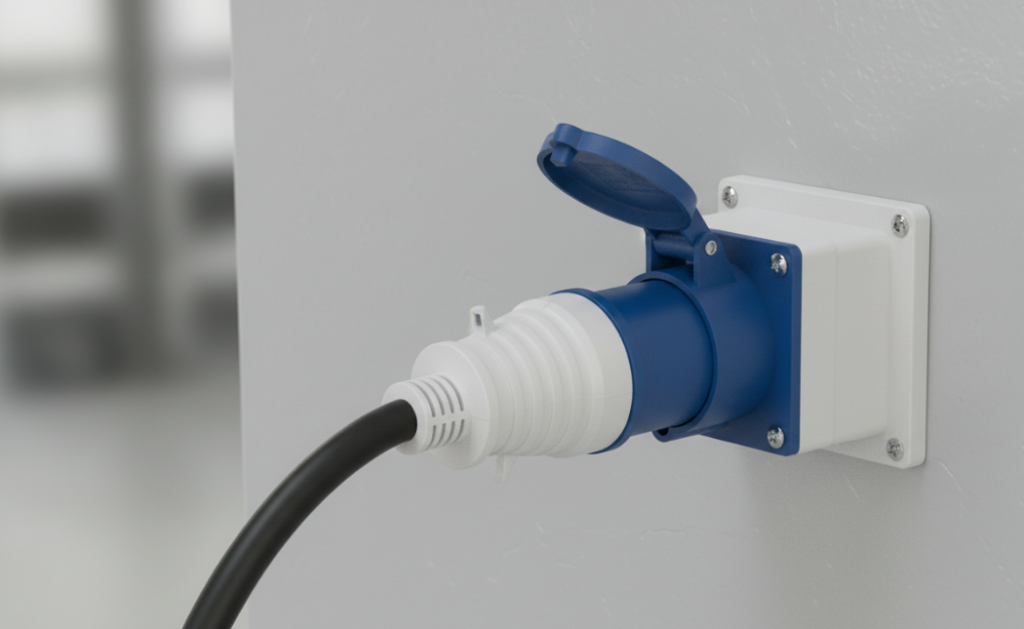
Before the electrician can test the circuit with a multimeter and disassemble the wall box to see the wiring, the socket must be labeled “disabled.” If you are in charge of heavy machinery or global power equipment, now is the time to evaluate the quality of the hardware. Ordinary civilian sockets do not last long under high current loads. Replacing those damaged old parts with industrial-grade plugs and sockets with high voltage and high current stability is the fundamental way to prevent sparks in the future.
Author: Mark Thompson
My career has taught me that most electrical accidents are preventable with the right knowledge and high-quality hardware. I’m dedicated to translating complex electrical issues into clear, actionable safety advice to help you protect your property and equipment from the hidden dangers of faulty circuitry.