 datong


Priz Nasıl Temizlenir
The most reliable way to clean the socket-especially the high-current industrial power connector-is to take three steps: power-off lock, physical oxidation removal, and chemical repair of the contact surface. The power supply must be locked, which is related to the prevention of arc flashover. First, use dry and clean compressed air to blow the debris and dust in the socket. For 63A to 125A high-load environments, terminals often have stubborn oxide layers or carbon deposits. At this time, professional residue-free electronic contact cleaners must be used, and nylon or brass brushes of just the right size must be used to brush the internal terminals. Finally, before reloading the IP-grade enclosure, be sure to stare at whether there is thermal discoloration and make sure that the contact resistance has been pressed to the lowest level. This circuit can effectively prevent voltage drop and allow heavy-duty power distribution systems to run for several years.
Phase 1: Lockout/Tagout And Safety Procedures
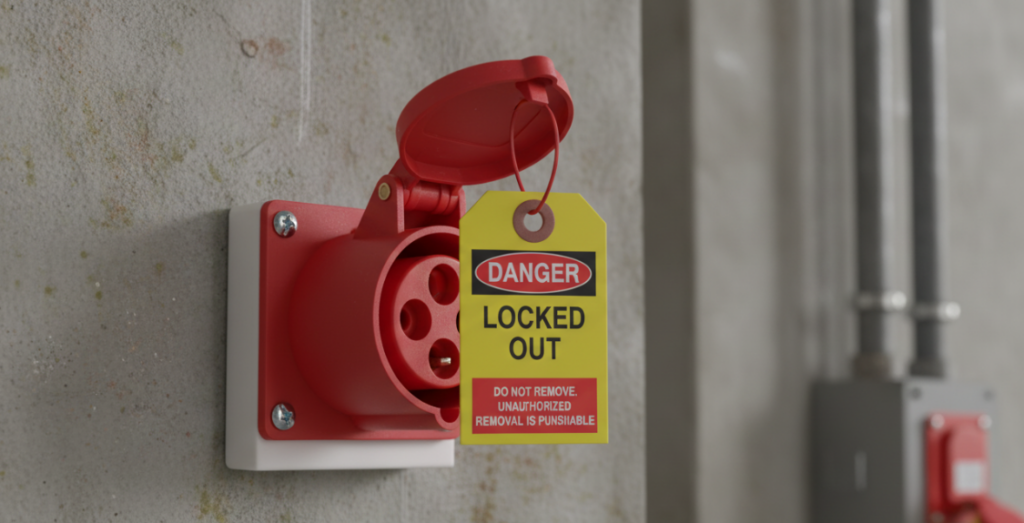
In the industrial high-voltage circle, power failure is not as simple as turning off a switch, but 1 a complete set of LOTO process. In many of the heavy machinery and new energy projects I ‘ve worked on, residual energy is often the most accident-prone. By completely isolating the power supply, you can ensure that the engineer will not accidentally bridge the live terminals when operating the tool and cause arc flashover. Without this step, all the maintenance actions behind would be impossible to talk about.
Phase 2: Physical Removal Of Debris And Particulates
The second step is to deal with the physical contaminants that have been drilled into the jack. Industrial sites, especially large machinery and equipment involving globalization, are surrounded by dust, gravel and even metal dust.
I recommend using clean, oil-free compressed air. In this way, the dead angle deep in the socket can be swept clean, and the precision spring sheet inside will not be deformed due to physical contact.
This link is also a good time to do “physical examination. I will take a closer look at the terminals for “pockmarks” or physical wear. For high-current components such as 63A or 125A, even if only a little debris causes uneven contact force, it will become the fuse of local overheating after power-on.
Phase 3: Chemical Repair And Oxide Layer Brushing
In high-load scenarios, such as the distribution system for new energy generation, blowing the earth alone is not enough. Over time, heat and environmental impact, brass or copper terminal surface will form a layer of non-conductive oxide film or carbon deposition.
Professional residue-free contact cleaner is standard. It can penetrate the oxide layer and volatilize quickly, leaving no oil film that easily absorbs dust or causes electrical tracking.
When brushing the internal terminals, the nylon brush or brass brush must be of the right size to ensure that it reaches every corner of the inner circumference of the socket. Only in this way can the contact area be maximized when the plug is plugged back in again, which is also the key to reducing the contact resistance.
Verification After Cleaning And Reassembly To Original Position
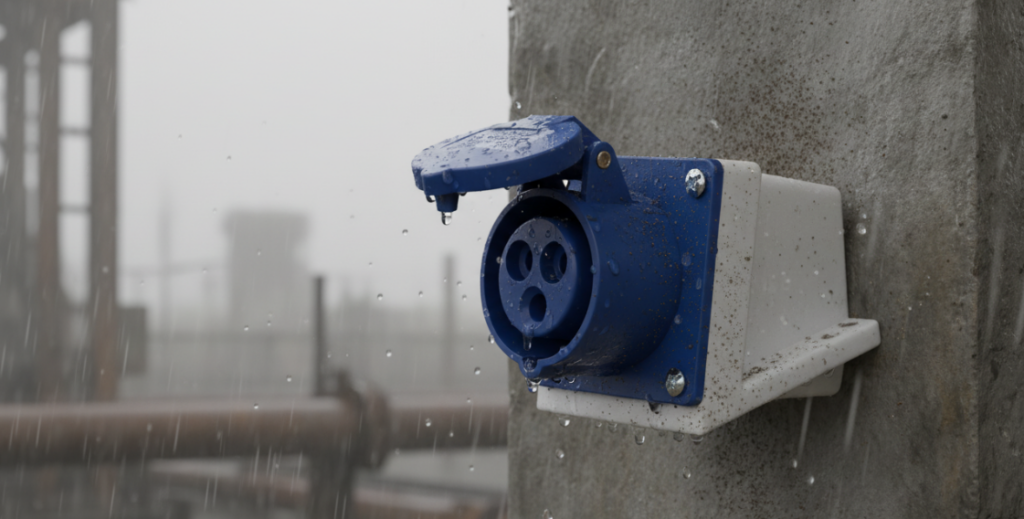
Don’t rush to finish cleaning, the last step is to verify. Before the system re-powering, you have to watch for signs of thermal discoloration-this is the “snitch” who determines whether the socket has overheated before “. If you see the metal turning blue or black, it means that the metal may have been annealed and damaged. At this time, cleaning alone cannot save it. It is responsible to replace it directly.
After confirming that the terminal is bright and there is no residue, put the IP grade shell back as it is. Be sure to check whether the sealing ring and gasket are in place, especially in industrial sites or outdoors with harsh environments. If the sealing is not done well, your busy work today will soon be in vain. Although this method of picking details takes some effort, it can really reduce the voltage to the lowest level and ensure the long-term reliable operation of the entire electrical infrastructure.
Yazar David Chen
My work focuses on ensuring operational safety and maximizing equipment uptime through precision maintenance protocols. I believe that even the smallest details—like the cleanliness of a 125A connector—are critical to the reliability of global industrial infrastructure.