 datong


How To Replace A Socket Cover
26Learn How To Safely Replace A Socket Panel With This Expert Guide. From Preparation To Final Installation, Ensure Your Home Stays Safe.
View detailsSearch the whole station
We call it a wall socket, which is a local electrical interface that provides mains power for home and office equipment. But there is no real “universal” standard in reality. On the contrary, the so-called “standard socket” is defined by the physical specifications, voltage and frequency of the region where it is located. This includes plug types from Type A to Type N, as well as 110V-120V common in North America or 220V-240V common in Europe and Asia, and frequency differences of 50Hz or 60Hz.
The North American standard is NEMA 5-15R. This socket has two parallel flat pins and a round ground electrode. The operating parameters are usually 120V/15A. In Europe, most areas use Type F “Schuko” sockets, which is a 230V/16A system with grounding. To ensure electrical compatibility and safety, standard sockets must be perfectly matched to the device’s power cord in terms of pin shape, amperage, and grounding requirements, and must strictly adhere to local safety certifications such as UL, CE or IEC.

While the basic functionality of power outlets is highly consistent across the globe, the physical configurations vary widely. The International Electrotechnical Commission (IEC) currently identifies and defines 14 different plug and socket types.
North American Standard: NEMA 5-15R (Type B) is the most typical “standard” in the United States, Canada and Mexico “. It is designed for three-wire systems that contain a dedicated ground wire.
European standards: Type F (Schuko) and Type C (Europlug) are the standards in most parts of the European Union. Unlike North American flat inserts, they use 4.8mm cylindrical prongs.
British Standard: Type G (BS 1363) is a British standard known for its unique rectangular flat pin design and built-in fuse requirements. The safety of this design is highly evaluated in the industry.
The nature of a “standard” power outlet depends more on the electrical logic behind the panel than just the shape of the hole. There are three electrical pillars to define the socket standard:
A central feature of any modern standard power outlet is its grounding mechanism. Grounding provides a safe path for current in the event of a short circuit and is the line of defense against electric shock.
In addition, in the professional field, “standard” is often equivalent to “certified”. In an industrial environment, if a socket does not pass strict safety benchmark tests, it cannot be called a standard socket:
UL: North American Standard Pass.
CE : Mandatory threshold for entry into the European Economic Area.
IEC: The global benchmark for electrical technology standards.
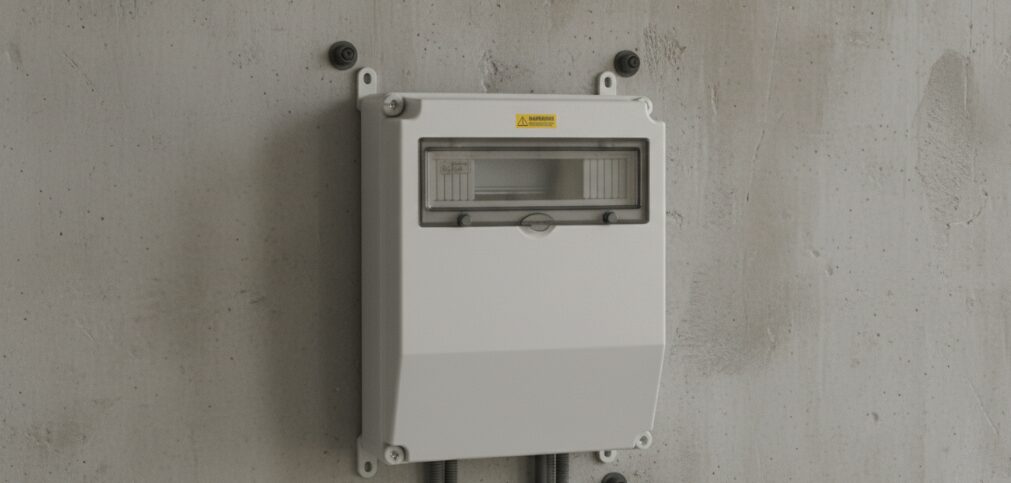
Defining “what is a standard power outlet” essentially requires a combination of geographic location and hardware-specific power needs. Ensuring that power cords, PDUs and connectors are aligned with these regional standards-that is, to achieve precise matching of type, voltage and current-is the foundation for a safe and efficient electrical infrastructure. Do not underestimate a small socket, it often determines the stability of the entire system.
Author: Mike Chen
“Hi, I’m a power infrastructure specialist at DTCEE. With years of experience in global electrical engineering, I’ve learned that a ‘standard’ is only as good as its application. My work focuses on bridging the gap between complex regional electrical requirements—such as voltage, frequency, and grounding—high-performance equipment. I am passionate about ensuring that every plug, socket, and PDU we deploy meets the highest safety benchmarks, like UL and IEC, to guarantee the stability of our clients’ critical systems worldwide.”

Learn How To Safely Replace A Socket Panel With This Expert Guide. From Preparation To Final Installation, Ensure Your Home Stays Safe.
View details
The Ground Pin Is Your Electrical “Escape Door.” Learn How It Prevents Shocks And Fires In Home And Industrial Use.
View details
Learn The 80% Rule For 15A/20A Sockets To Avoid Circuit Overloads And Protect Your Home From Electrical Fires.
View details
Is Your Socket Hot? Learn The Causes Of Overheating, Fire Warning Signs, And Critical Safety Steps To Take Now.
View details
HelloPlease log in