 datong


Can A Plug Socket Catch Fire
Straight to the conclusion: Yes. Not only do sockets catch fire, but if you don’t know how to recognize those red flags, fires often break out when you’re unprepared.
The root cause of the vast majority of outlet fires is actually quite typical: nothing more than an overload, loose wiring, or abnormal heat buildup caused by a short circuit. If you notice a faint, strange smell coming from the outlet (usually like fish or burning plastic), brown scorch marks on the panel, or hear a “sizzling” sound of electricity, then the outlet is already in an extremely high-risk state. It’s the internal resistance that’s frantically generating high temperatures, enough to ignite the surrounding wall material. Once the outlet is hot to the touch or there is a noticeable spark when plugging or unplugging high-power appliances, don’t hesitate to stop using it immediately and go to the distribution box to cut off the power, otherwise the consequences may be a devastating fire.
Especially in those high-load industrial environments where prevention is always more important than fighting fires.
Why Did The Socket Become “The Arsonist”?
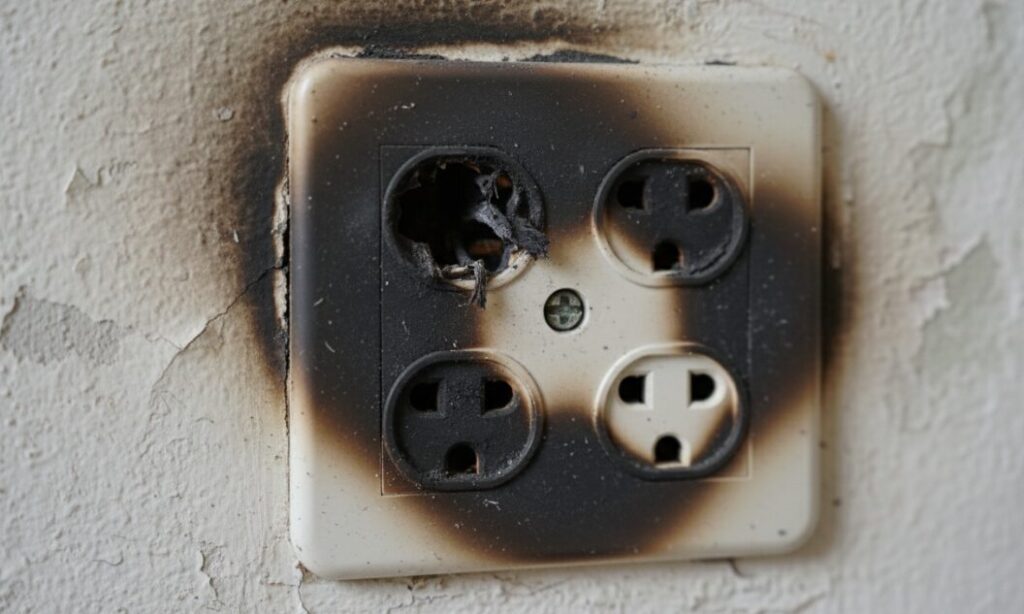
Electrical fires are never accidents, they are the result of physical laws. When current flows through a conductor, resistance is inevitably generated. If there is a problem at the connection site, the resistance will surge and heat will follow.
- Overloaded Circuits: This is the number one killer of outlet fires. Each socket has a rated current (such as the common domestic 10A/16A, or the industrial standard 32A/63A). When you cram a bunch of high-powered devices into the same outlet with a low-quality adapter, the internal components exceed their thermal limits. Taking ordinary civilian sockets to bring heavy machinery in a factory is simply playing with fire.
- Loose or Corroded Wiring: Over time, the wires can break off the terminal blocks due to machine vibrations (common in factories) or thermal expansion and contraction of the material. This “dashed” creates an arc ——current that jumps directly over the gap. This arc can reach temperatures of several thousand degrees Celsius and can ignite the plastic casing in an instant.
- Short Circuits: If the insulation is damaged or water gets in, the hot and neutral wires are directly “close contact”, and the current will surge instantly, causing flashover and fire.
Things That Must Not Be Ignored
Early detection is key to securing housing. Keep an eye on the following:
- Discoloration and Scorch Marks: If yellow, brown, or even black appears around the jack or around the edge of the panel, it means the components inside are melting.
- That “fishy smell”: The insulation material of the socket is usually urea-formaldehyde resin or phenolic resin. This thing, when overheated, has an extremely pungent, dead fish-like odor. If you smell it, don’t doubt it, check the circuit quickly.
- Sizzling or crackling: This is the sound of an electric arc jumping. It is sending you a final cry for help.
- Abnormal fever: A normal socket should be at room temperature. If the panel is hot to the touch, the internal resistance has reached dangerous levels.
How To Prevent In A High-demand Environment?
The trial and error costs are too high for businesses and industrial facilities. Ordinary plastic sockets simply cannot withstand the constant high load.
Upgrading Industrial-grade Solutions
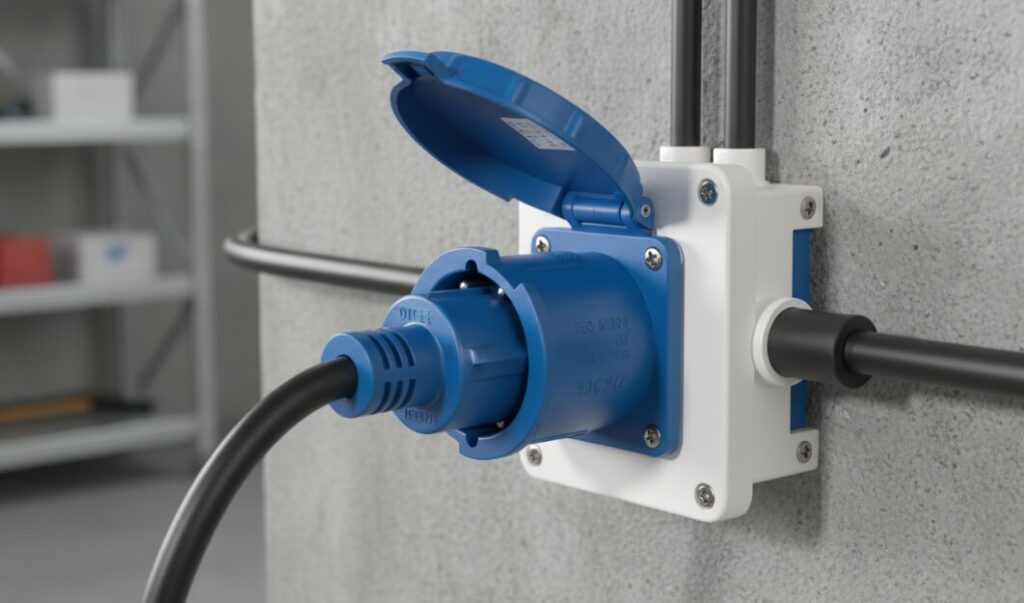
There is no compromise on safety issues, and replacing high-performance industrial plugs and sockets is the lowest-cost insurance. Industrial series like DTCEE, are designed specifically to cope with high current loads, without any worry of overheating. These IEC 60309-compliant connectors have several core advantages over civilian sockets:
- Heat-resistant material: Made of special polymer, it does not support combustion.
- Mechanical locking mechanism: prevents wiring from loosening due to vibration.
- High IP rating: Dustproof and waterproof, plugging short circuits caused by impurities entering from the source.
Regular Infrared Thermography Detection
Infrared thermal imaging cameras can help you find “hot spots” that are invisible to the naked eye and extinguish hidden dangers before flames appear.
What Should You Do If The Socket Is Already Smoking?
- Never touch the socket: otherwise you are likely to become part of the current circuit and be directly electrocuted.
- Cut off the power: Don’t bother unplugging it, just rush to the distribution box and turn off the main gate or corresponding circuit breaker.
- Use a Class C fire extinguisher: If it is already burning, water is strictly prohibited! Only use dry powder fire extinguishers or carbon dioxide fire extinguishers.
- Complete replacement: After the hidden danger is eliminated, you must replace it with a high-quality heavy-duty socket with matching specifications, and don’t fall into the same pit twice.
Summary
The socket fire was a completely preventable tragedy. As long as you can identify the burning smell, watch for scorch marks, and ensure your electrical infrastructure can handle the actual load, you can avoid the vast majority of pits. If you are in industry, equip your system with reliable industrial-grade plugs and sockets like DTCEE. This is a truly responsible and safe investment.
Author: Marcus Thorne
I am a dedicated electrical engineer with over a decade of experience in electrical safety and industrial power systems. Having managed countless high-load electrical installations and investigated numerous fire incidents, I specialize in identifying hidden circuit vulnerabilities before they escalate into disasters.