 datong


Are Socket Protectors Safe
Industrial socket protection covers ——especially those with built-in spring return covers and heavy-duty shields—— are not only absolutely safe, but are also a mandatory component to maintain the IP67 or IP44 protection level of the distribution system.
This is nothing like the controversial plastic protective plugs in your home that can easily damage the internal structure of the socket. Professional-grade CEE connector protection covers are specifically designed to prevent short circuits, reduce the risk of arc flashover, and isolate the human body from accidentally touching live parts in high-voltage environments. According to IEC 60309, to ensure operational reliability on industrial sites, these protective covers must be relied upon to block moisture ingress, dust accumulation and chemical corrosion. From a maintenance management point of view, the safety of these covers is only really reliable if they are manufactured from high-strength materials such as polycarbonate or nylon 6, because this allows them to withstand the extreme mechanical impacts of factories or construction sites without destroying electrical integrity.
The Essential Difference Between Industrial Grade And Household Socket Protective Cover
To figure out why industrial socket covers are safe, we first have to peel them off along with those household “child-proof” plugs. Household plugs sometimes break socket stops, which is a real hazard; but socket protection covers in the industrial field are structural engineering components. For CEE connectors, these protective covers are part of the housing at the time of production and are a rigid structural requirement rather than a random addition “small accessory” later. In heavy-duty electrical environments, without this layer of structure, the system may fail devastatingly at any time.
Hard Indicators Of Safety
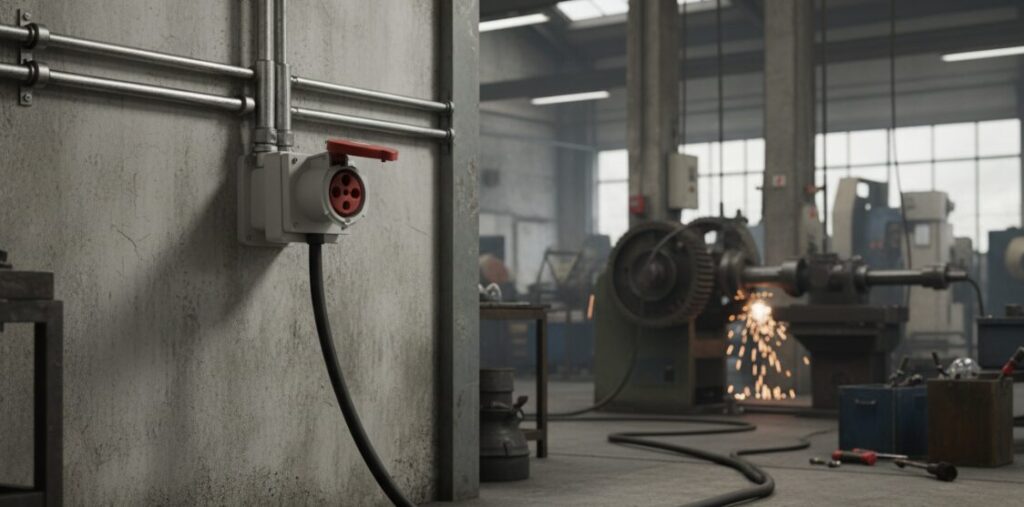
The safety of industrial socket protection covers is not stated by feel, it is subject to the international standard IEC 60309. The standard mandates that sockets in industrial environments must have a specific level of protection against electric shock.
- All-in-one design: Professional protective covers are all designed “fail-safe type”. This means that as soon as the plug is pulled out, the spring mechanism immediately drives the cover to close automatically.
- Arc Flashover Protection: By ensuring that connection points are physically shielded, these covers protect surrounding operators by reducing the risk of ionized gas ejection in the event of minor electrical failures. Many electric shock accidents are actually caused by the cover being damaged and not replaced in time.
IP44 And IP67 Protection Logic
For facility maintenance managers, the word “safety” is equivalent to “being able to handle things at critical moments”. The security of the entire distribution network is highly dependent on the IP protection level, which depends entirely on the integrity of the protection cover.
- Dust and impurity protection: In manufacturing plants, once metal dust or conductive particles slip into the socket, they can cause internal short circuits every minute. A thick protective cover keeps the contact carrier clean at all times.
- Moisture and corrosion protection: Like on outdoor construction sites, IP67 rated protective covers with locking rings are key to ensuring a sealed and waterproof seal. Without these covers, moisture can cause the contacts to oxidize quickly, heat up, and ultimately cause an electrical fire.
Why Polycarbonate And Nylon 6 Are So Critical
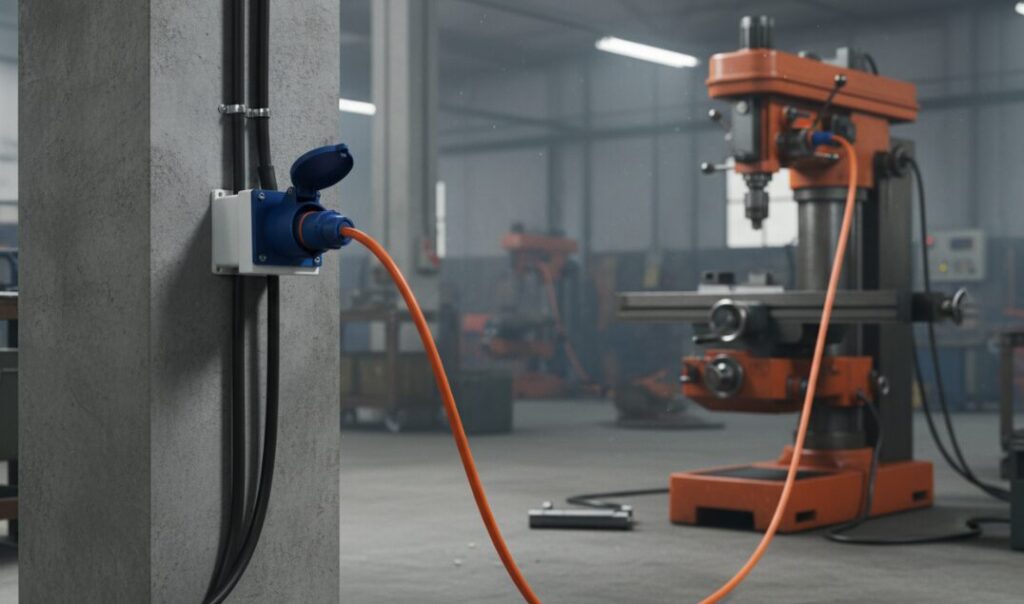
- Resistance to mechanical stress: Littering of things and impact of heavy objects on the construction site are the norm. These high impact resistance materials ensure that the cover will not crack when subjected to force, otherwise the protection level will be zero instantly.
- Thermal stability: These materials are flame retardant in their own right. If the circuit starts to heat up due to overload, the protective cover will not turn into a pool of water or fuel combustion, and it can always maintain the physical barrier between the live parts and the outside world.
Final Conclusions For Electrical Professionals
To maintain the safety red line, I recommend that you make sure to check regularly to confirm that the protective cover is intact, the spring tension is sufficient, and the material is indeed able to cope with the chemical or mechanical pressure on your station. If the cover is broken and still holds up, no matter how good the system is, it is not safe.
Author: Marcus Chen
My expertise lies in evaluating the structural integrity and material science of electrical components—specifically high-impact Polycarbonate and Nylon 6—to ensure they maintain critical IP44 and IP67 protection levels. My mission is to bridge the gap between theoretical electrical standards and real-world operational safety, ensuring that every industrial power distribution system is both reliable and compliant.