 datong


Do Sockets Have Fuses
Let’s just draw a conclusion: No. Ordinary wall sockets actually basically do not have fuses.
many peopleI’ve noticed a misconception among : a dead appliance is a blown fuse in the outlet. In fact, in modern circuit design, the protection mechanism is “centralized”. All the overload or short-circuit protection is concentrated in the distribution box (that air switch box). If something goes wrong at an outlet, the circuit breaker in the distribution box will trip directly, cutting off the power to the entire branch to prevent fire, rather than solving the problem inside the outlet.
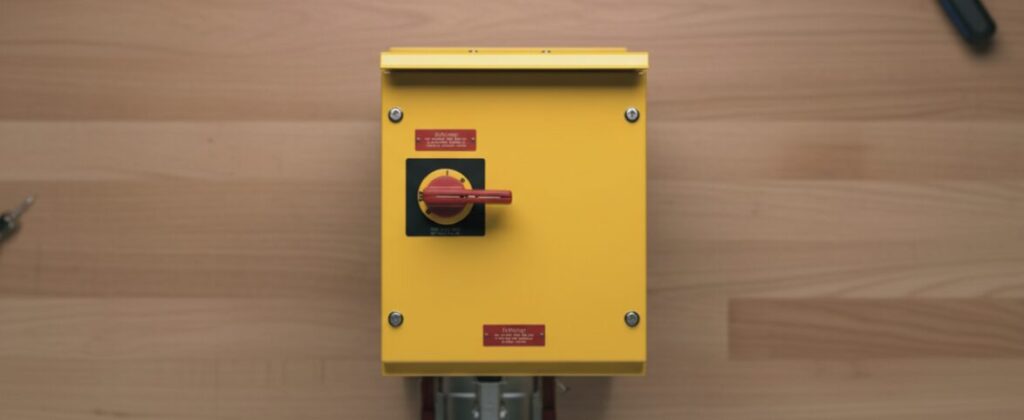
Why Aren’t Fuses In Sockets Anymore?
In the current field of electrical engineering, whether living in a home or a factory, design logic tends to be centralized. If you plug a fragile fuse into each of hundreds or thousands of sockets, the subsequent maintenance costs will be a nightmare.
Especially in places like industrial environments, where the flow of electricity is immobile, it is 63A or even 125A. The heat generated by this large current is very considerable. If you must plug a small fuse into the socket, that point will become the weak link most likely to catch fire. So we prefer to use micro circuit breakers (MCBs) or leakage protectors (RCDs), which react faster than fuses and can be broken back directly after tripping without having to look for spare parts everywhere.
Special Case: BS 1363 System In The United Kingdom
Although the socket itself has no fuse, if you are in the UK, or use a British standard system, the situation is completely different. UK sockets don’t have fuses themselves, but they have a ceramic fuse tube hidden inside their “plug”.
This is because the UK custom uses “ring circuits”, where a loop may have a current rating of up to 32A. To protect the thinner power cord of the appliance from being burned, a 3A, 5A or 13A fuse must be added to the plug. So, if you have a plug like this and it suddenly runs out of power, don’t go and tear down the wall, check the little tube in the plug first.
Plug-In Boards And Industrial Tow-Out Boards
Many users ask “whether the socket has a fuse”, but it is actually because they use a power strip (row plug). The “socket” you are using at this time is actually a mobile power distribution unit.
For safety, slightly more professional plug-in boards will have built-in protection mechanisms. I’ve seen many rows of plugs suddenly lose power after being plugged into a high-powered machine, and that’s usually when the following things are working:
- Integrated thermal fuse: automatically disconnects if it gets too hot inside.
- Surge protector: specially designed to prevent lightning strikes or voltage spikes.
- Overload protection switch: It is the small button that pops out and can be restored by pressing it back.
Safety Logic In Industrial-Grade Applications
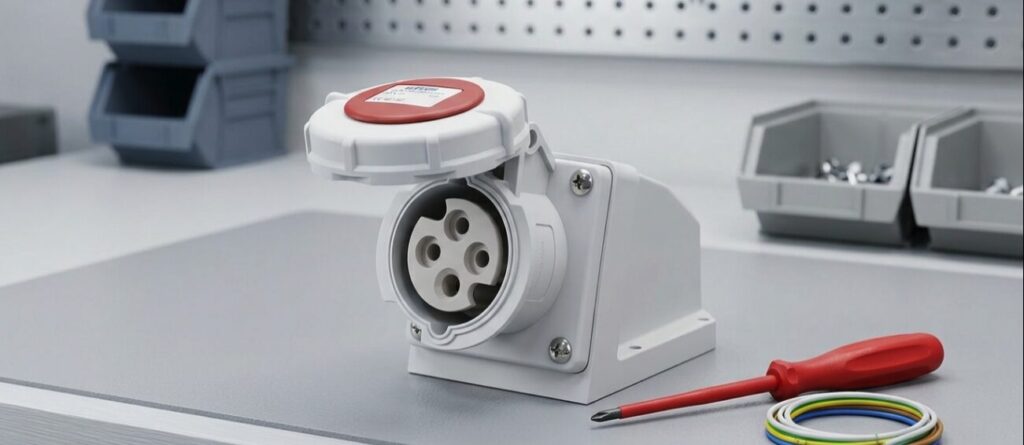
In high-end scenarios such as new energy or large machinery, our focus has changed from “whether there is a fuse” to “environmental tolerance”.
The design focus of industrial sockets is:
- High current carrying: Make sure not to derate the 125A for long runs.
- Protection level (IP level): For example, IP67. The vast majority of industrial site socket failures are due to poor contact caused by ash and water ingress, not some blown fuse.
- Mechanical interlock: This is a very important safety point, that is, you cannot unplug the plug without turning off the power, which eliminates arc sparks from the root.
What If It Breaks?
If your device is stopped and you are sure the outlet itself is unfused, I recommend following this step:
- Go open the battery: See if the branch circuit breaker jumps.
- Flip the plug: If it is British standard, check the fuse in the plug.
- Cross-test: Try replacing the device with an outlet that is certain to have electricity to rule out the possibility of the machine itself burning out.
- Check the adapter: If the power strip is connected, look for the reset button.
Author: Robert Chen
Hi, with over a decade of experience in electrical installation and industrial maintenance projects, I’ve managed everything from home studio wiring to complex factory power systems. I am passionate about debunking common electrical myths and helping users understand the “safety logic” behind their walls.