 datong


Are Plugs Waterproof
Ordinary plugs are not designed to be waterproof. Their level of protection depends entirely on the IP protection level.
The vast majority of household plugs on the market offer little or no protection, while true professional-grade industrial plugs are manufactured in strict accordance with international standards such as IEC 60309. In harsh environments, only plugs marked with a high IP rating can be called “waterproof”, meaning they are not only dustproof but also resistant to powerful water sprays and even short dips. In comparison, the IP44 is only “splashproof” and is fine for use in wet areas, but direct exposure to heavy rain or high-pressure flushing is basically asking for trouble. For global machinery or renewable energy stations, choosing a plug with a precision sealing gasket, a sturdy housing and a safety locking mechanism is the only way to avoid short circuits, corrosion and fatal electric shock accidents.
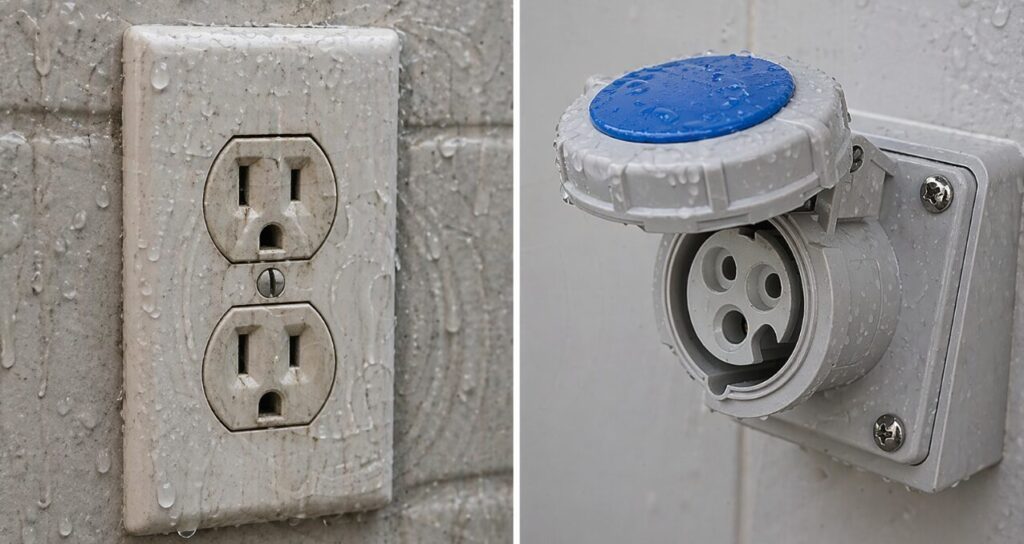
Core Difference Resistance and Waterproof
In the field of electrical connections, the words “water-resistant” and “waterproof” are often conflated, but the difference is significant.
So-called water-resistant plugs are designed to resist moisture to a limited extent and are usually rated IP44. This “splash-proof” capability is sufficient to cope with slight condensation or incidental splash in indoor environments.
However, true “waterproof” performance requires higer IP rating certification. These plugs are designed for the most demanding conditions ——such as outdoor photovoltaic stations or multinational production lines——. In these places, the plugs may face flushing from high-pressure water guns or even be temporarily submerged in water. If you don’t reach this particular level, moisture can easily seep into the housing, causing internal corrosion and triggering instantaneous circuit failure.
Industrial Plug IP Grade
To tell if a plug is actually waterproof, you have to look at its IP rating. This is a hard metric determined by the IEC 60309 standard:
- IP44 (splash-proof): It can prevent solids with a diameter greater than 1mm from entering and can resist splashing water in any direction. They are suitable for sheltered industrial use but should never be used in areas where heavy rain could get to them or where they need to be hosed down.
- IP67 (Waterproof): The IP67 grade plug is completely dustproof and can be soaked in one meter of water for 30 minutes without any problems.
- IP68 (Pressure Waterproof): Designed for continuous immersion under pressure. Such plugs are often used in special application scenarios where moisture isolation is extremely demanding and absolutely cannot be lost.
Engineering Details Of Professional Waterproof Plugs
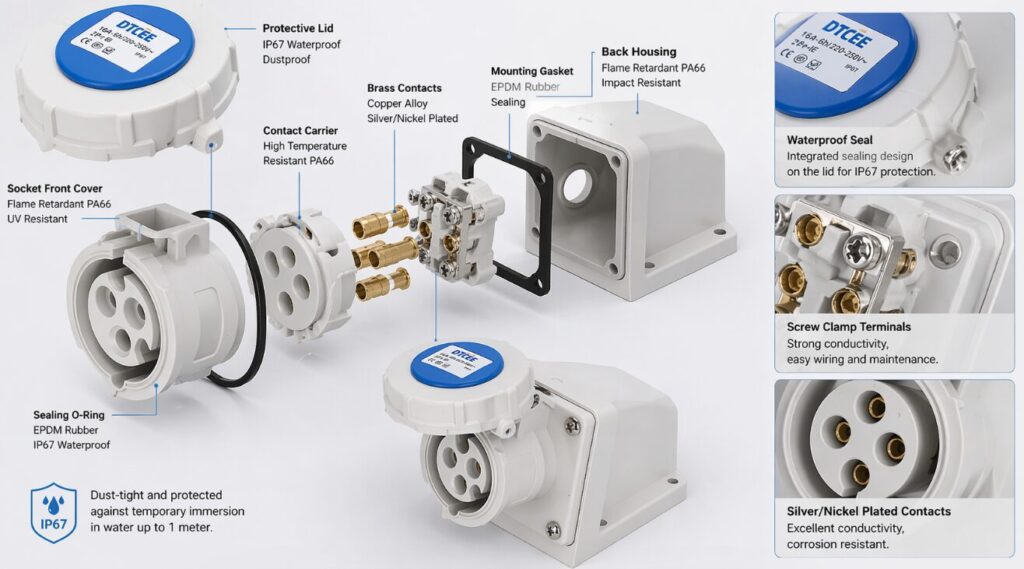
Achieving a waterproof seal is not as simple as coating the shell with plastic. There is a set of precision engineering behind it. High-quality industrial plugs rely on three key components to maintain their IP67/IP68 integrity:
- Precision-engineered sealing gaskets: These high-grade rubber or thermoplastic elastomer seals are located at the connection interface. These gaskets ensure that no liquid can get in as long as the plug is closed.
- Robust shell: The shell must be made of high impact resistance and ultraviolet (UV) resistant material. Even if a hairline crack appeared on the housing, the waterproof rating of the entire plug would instantly return to zero.
- Safety locking mechanism: Home plugs can be opened by pulling, but industrial waterproof plugs are different. They typically employ a threaded ring or bayonet type locking system. This mechanical locking ensures that the sealing gasket is always under pressure, and can maintain a tight waterproof seal even under severe vibration or mechanical pulling.
Why Quality Matters
Using plugs with inadequate protection in wet environments is tantamount to playing with fire in safety matters. The costs for global machinery trade and renewable energy infrastructure are simply too high:
- Short circuit: Water is a conductor. In a high-current connection like a 63A or 125A, even a tiny bit of moisture inside can cause a split-second short circuit that can burn out expensive equipment.
- Concealed Corrosion: Salt water or water containing chemicals can corrode the brass pins inside over time. This corrosion is often invisible, but it can lead to increased contact resistance, heat generation, and ultimately fire risk.
- Electric shock injury: On outdoor work sites, a failed plug is a direct threat to personnel safety.
Choosing The Right Protection
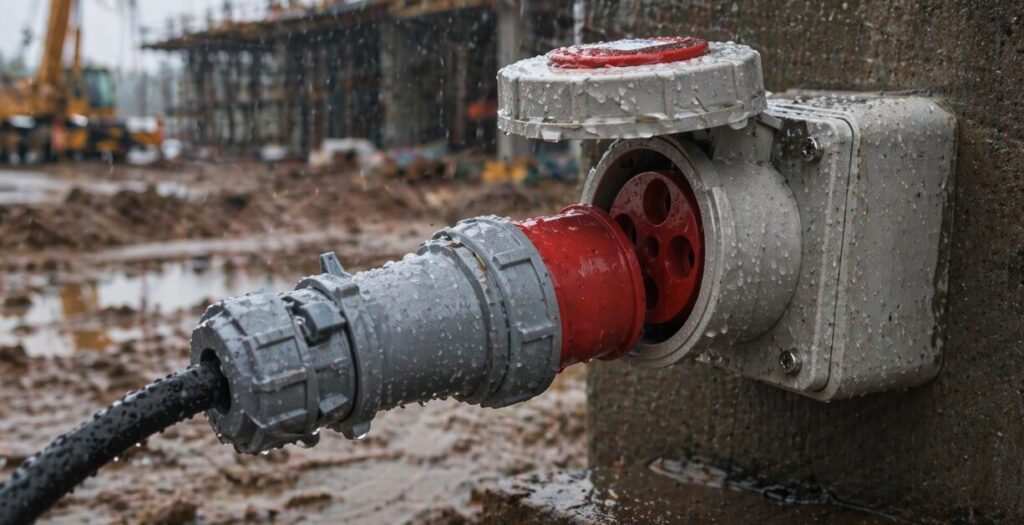
In industrial procurement, it is not feasible to count on a home-level approach. I strongly recommend prioritizing plugs that comply with IEC 60309 standards and have IP67 or IP68 ratings, which is the bottom line for ensuring equipment life and field safety. Remember, only plugs with a strong gasket, heavy-duty housing, and a reliable locking system will give you true waterproof protection.
Author: Alex Chen
I’m dedicated to highlighting the vital distinction between water-resistant and truly waterproof plugs. My aim is to empower procurement and engineering design teams to make informed choices based on IEC 60309 standards and IP ratings (IP67/IP68), safeguarding equipment and personnel from costly and dangerous failures.