 datong


How To Replace A Socket Cover
32Learn How To Safely Replace A Socket Panel With This Expert Guide. From Preparation To Final Installation, Ensure Your Home Stays Safe.
View detailsSearch the whole station
The short answer is no, standard outdoor sockets are not completely waterproof on their own.
Many people directly plug in courtyard lights, various electric tools or garden equipment outside, thinking that a socket outside the wall can rest easy. In a rainstorm, such an exposed socket alone cannot stop a short circuit or electric shock. According to the rigid requirements of the National Electrical Code (NEC) , if you want outdoor sockets to be truly waterproof and safe when they are used with electricity, you must pack together these core components: a weather-resistant socket that can resist ultraviolet rays and extreme temperatures, and a Ground Fault Circuit Interrupter (GFCI) that can cut off the power instantly when moisture causes a fault, plus a in-use weatherproof hood.
It is too important for every owner to understand the logic behind outdoor electricity safety. I will specifically disassemble why ordinary sockets are not used at all, and how these three pieces stipulated by NEC are combined to make them truly waterproof.
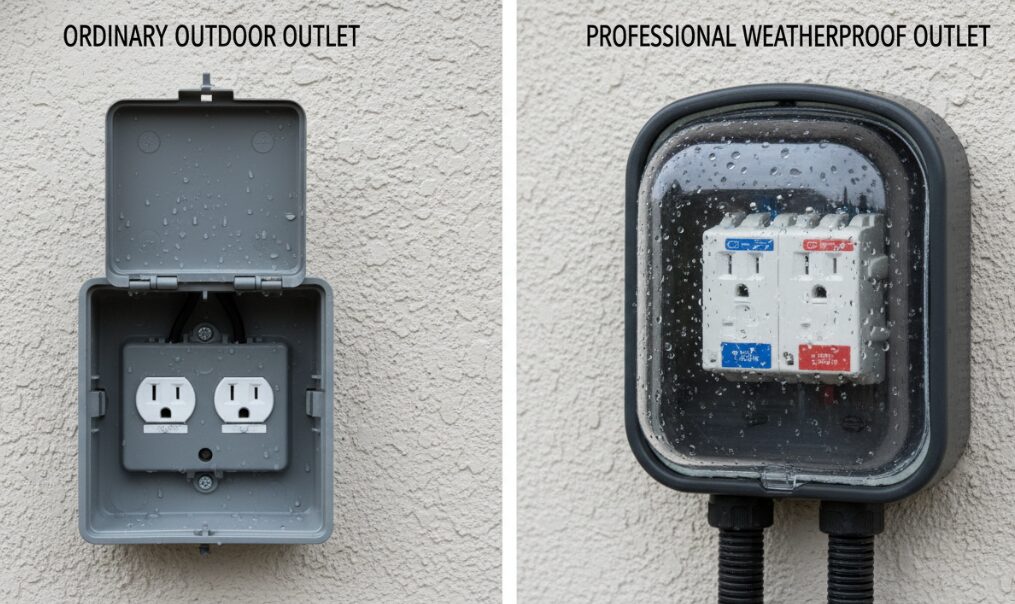
The standard outdoor sockets are just “weather-resistant.”
When you hang holiday light strings in the backyard, or plug in a chainsaw to do DIY and drive an electric lawn mower, the standard outdoor socket can’t withstand the hard front of the heavy rain. Water is an extremely efficient conductor. Once rain or snow sneaks into the plug connection along the gap, the current will be connected instantly, followed by two immediate dangers:
As long as you are outdoors with electricity, you must have active protection. It is far from enough to have a socket shell.
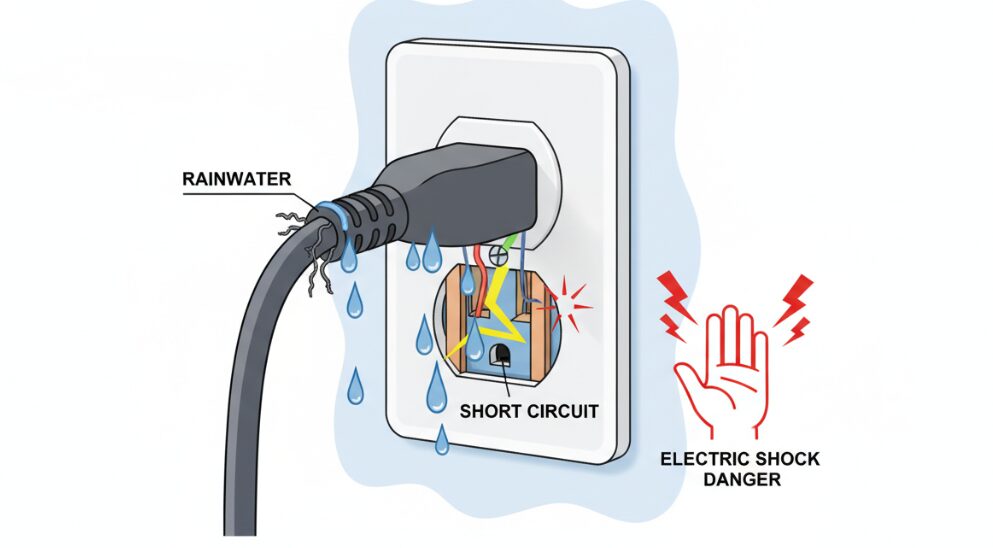
In order to prevent major accidents in wet environments, the National Electrical Code has set strict rules. To make an outdoor socket that is powered on safe and waterproof, the following components are indispensable:
This is the foundation of the entire outdoor electricity safety. Ordinary plastic shells will crack and crack after being exposed to the sun for a long time, but WR sockets are made of heavy-duty materials specially designed to deal with strong ultraviolet exposure. They are manufactured with extreme temperatures in mind-whether it’s freezing and snowfall in winter or hot summer, it’s physically structured to stay out of trouble all year round.
You never know where the water will come from, so there must be a second safety net. Water can be said to be the mortal enemy of the circuit. In case water really breaks through your physical defense and seeps into the socket, it will cause a “ground fault”.
GFCI outlets will stare at the movement of the current. As long as it detects even a tiny current anomaly caused by a little bit of moisture, it will instantly cut off the power within a few milliseconds. It has already cut off the danger before you feel the electric shock.
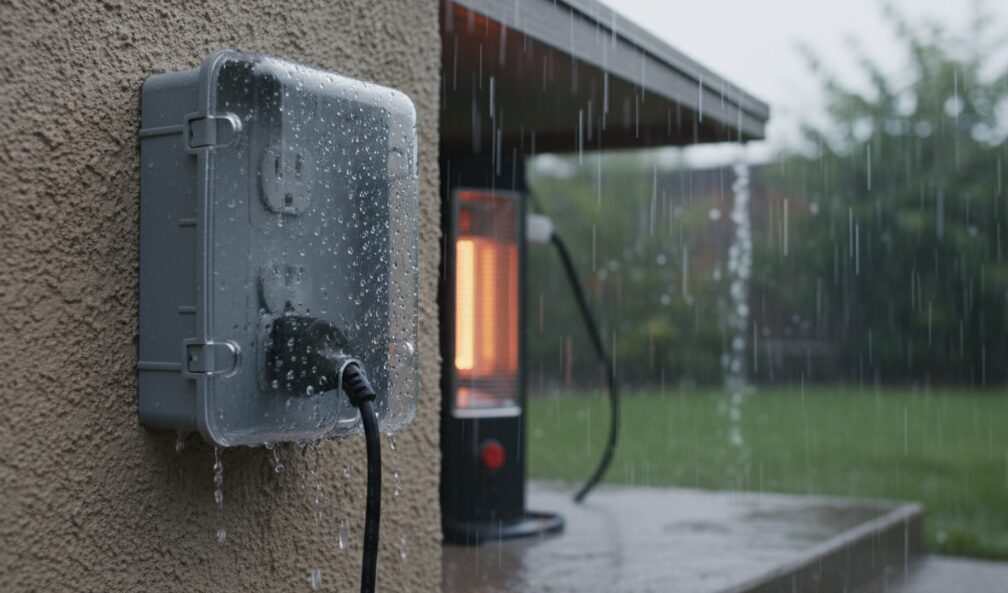
The last and most critical part of the real waterproof is this physical barrier.
Many houses are still equipped with standard flat flip covers on their exterior walls now. The lid has a fatal logical flaw: it only protects the socket when you plug in nothing. Once you open the lid and plug in the mower, the inside of the socket is completely exposed to air and rain.
If you want to keep water out when you plug in the electricity, you have to change into this deepened bubble cap. Its internal space is large enough to plug the entire plug and the curved wires. It is the special sealing gasket at the bottom outlet. When you attach the bubble cap to an energized wire, the gasket will bite the cable tightly. This clever design allows the current to be safely and securely delivered to your outdoor equipment, while protecting the physical plug-in interface and keeping rain, snow and moisture in the air out.
Author: David Miller
I’m a licensed electrician and home safety inspector with over 20 years of field experience. Having seen firsthand the dangers of improperly installed outdoor wiring, I am passionate about helping homeowners understand NEC standards.
Learn How To Safely Replace A Socket Panel With This Expert Guide. From Preparation To Final Installation, Ensure Your Home Stays Safe.
View details
Explore Global Socket Types, Voltages, And Safety Standards Like UL/CE To Ensure Secure Electrical Infrastructure.
View details
Learn Why “Upside Down” Sockets With The Ground Pin Up Prevent Short Circuits And Are Standard In Medical And Industrial Sites.
View details
Troubleshoot Socket Failures: Reset GFCIs, Fix Breakers, And Prevent Overloads With Professional Electrical Safety Tips.
View details
HelloPlease log in