 datong


Can You Paint Socket Covers
The direct answer is yes. Indeed, many people will think of painting the socket panel to match the interior decoration style. This is technically possible, but if you don’t want it to become a safety hazard or become mottled off quickly, you have to follow a strict set of technical procedures.
Why is safety always the first priority when painting?
Although changing the color can make the home look better, electricity is no joke after all. If you want to spray paint directly on the cover against a live outlet, you’re purely giving yourself a hard time.
The main risk is the infiltration of paint solution. Once wet paint drips into the contact points inside the socket, it can turn into an insulator causing poor contact, or worse—— into a conductive bridge causing a short circuit or even fire. So the first step must be to power off the power and then completely remove the panel. Only by completely separating the panel from the charged bottom box can the stability of the circuit system be guaranteed.
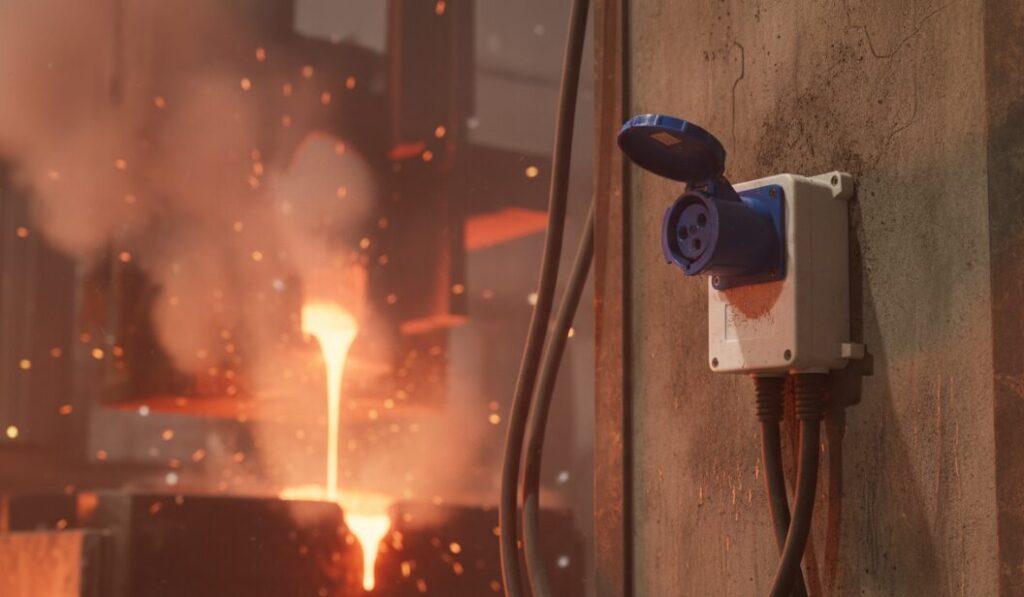
What Should You Do If You Want Long-lasting
The life of your paint finish depends entirely on what you do with the surface. This plastic thing has a dense surface and the paint is hard to “grip” on. If you don’t follow the steps below, I guarantee the paint will start peeling in a few weeks:
- Complete degreasing: Don’t underestimate the fingerprint oil on the panel. If you don’t get rid of it, the paint will definitely not hang. It is necessary to rub it with dish soap or isopropyl alcohol.
- Sanding: Lightly sand with fine sandpaper of 400 grit or more. This step is to create microscopic grooves in the plastic surface that the primer can “bite” into.
- Special primer: A special primer for plastics must be used, which can act as a chemical bond between the plastic and the paint.
- Thin spray with multiple layers: Choose a non-conductive spray paint. It is better to spray it several times thinly than too thickly at once, otherwise the runny and bubbles will make you want to cry.
Limitations Of DIY Paint Covers
Even if you do it perfectly, a manually painted cover is essentially a “mod”. Its physical properties are incomparable to the original parts:
- Mechanical wear: The plug is pulled out and out, and the paint will be scratched sooner or later.
- Poor heat resistance: Household paints are generally not tested for high heat. In case the socket gets slightly hot under high load, the paint may bubble or even emit a strange smell.
- Chemical resistance: You usually use cleaning agents to wipe the floor or walls, but if you accidentally touch the paint, it may discolor or become sticky.
Why Does The Industrial Environment Never Rely On Painting?
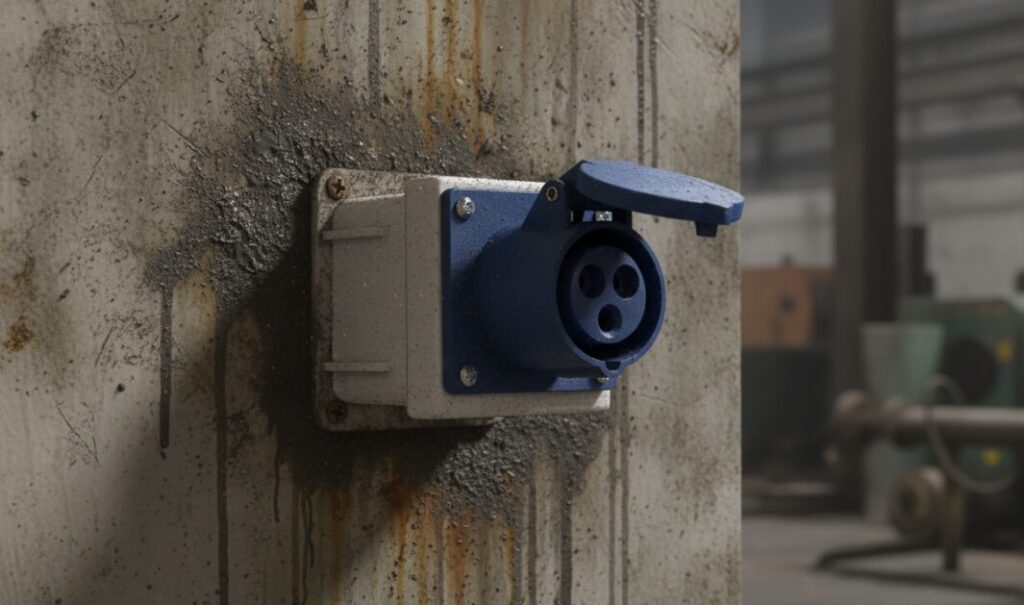
In factories or high-traffic commercial areas, the situation is completely different. For plug and socket scenarios like DTCEE, which are designed to handle heavy loads, painting is not a solution that can be applied to countertops at all. The thin coat of paint is a joke in an industrial environment with high temperatures, impacts and various chemical corrosion.
In such demanding occasions, professionals usually choose directly polycarbonate (PC) or nylon cover in the original color.
Advantages Of Professional Grade Materials:
- Color unity: The color is directly injection molded in. Even if it is bumped, the color inside and outside is the same. There is no such thing as paint peeling.
- Hardcore heat resistant: These materials are flame retardant in themselves, can withstand industrial-grade high temperatures, and meet international safety standards.
- Manufacturing resistance: Polycarbonate is very resistant to collisions. It can also withstand the impact of a cart or heavy objects in the factory. However, the painted plastic sheet may break directly.
Appearance Or Performance?
It is no problem to remove it according to the rules and paint it carefully. But if you are on an industrial site, or have hard requirements for safety and durability, don’t waste time on painting, and just buy that industrial-grade original colored cover. After all, long-term reliability and compliance are far more important than that little visual.
Author: Marcus Chen
“Hi, With over a decade of experience navigating the complexities of construction and renovation sites, I’ve seen firsthand how the smallest DIY shortcuts can lead to significant safety risks. I specialize in bridging the gap between home design and industrial-grade reliability, helping both homeowners and professionals choose the right materials—like polycarbonate and nylon—to ensure long-term performance and safety in any environment.”